Category: Reports & Publications

  • TIJCEF Strengthens Evidence-Based Programming Through Monitoring and Impact Documentation

    TIJCEF Strengthens Evidence-Based Programming Through Monitoring and Impact Documentation

    TIJCEF Strengthens Evidence-Based Programming Through Monitoring and Impact Documentation

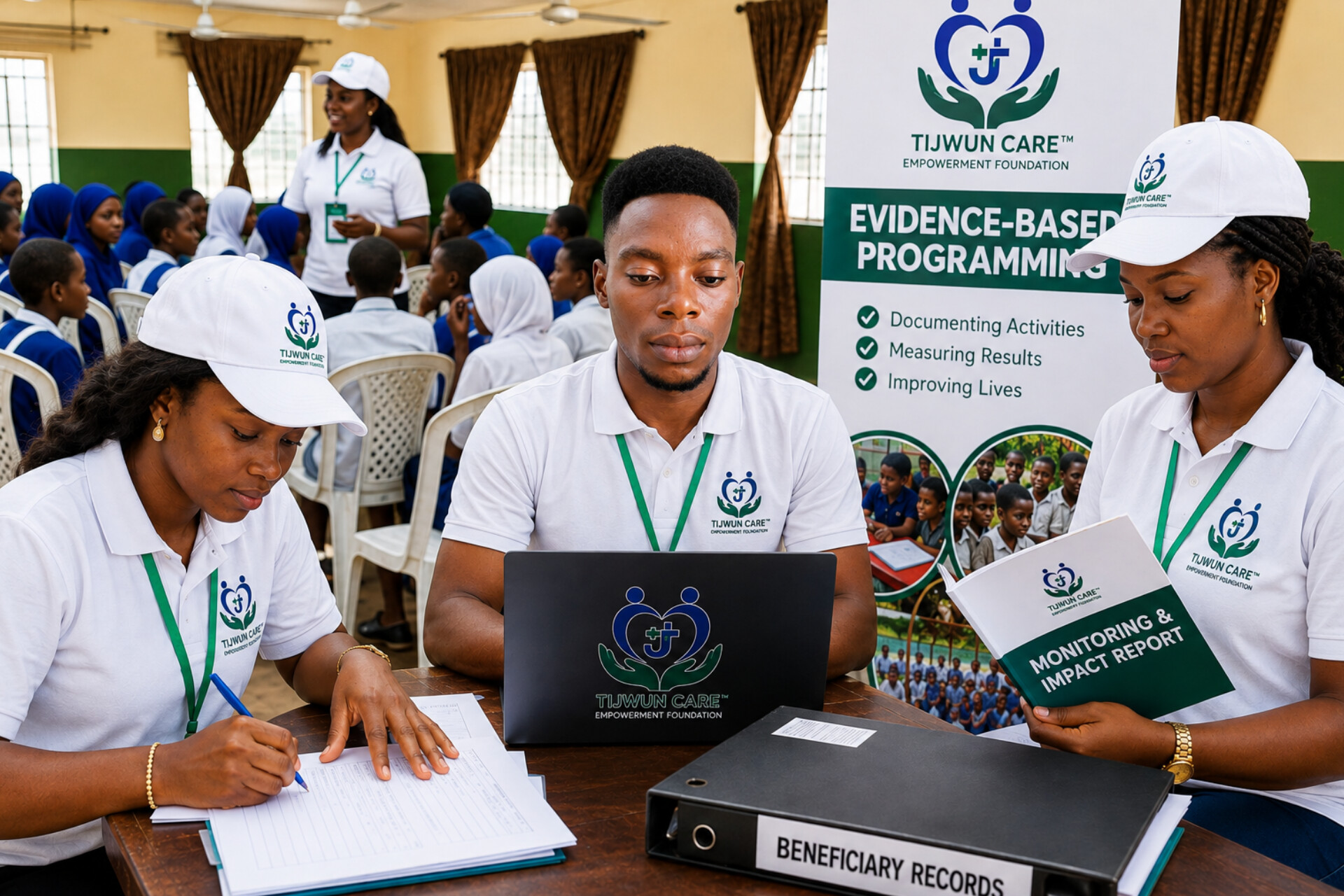
    The Tijwun Care and Empowerment Foundation (TIJCEF) is strengthening its approach to community development by placing programme documentation, beneficiary records and measurable results at the centre of how it tracks and communicates its interventions across communities.

    The approach forms part of TIJCEF’s Evidence pillar, one of the four pillars guiding the Foundation’s work alongside Dignity, Agency and Resilience.

    Rather than relying solely on statements about people being “empowered” or “impacted,” TIJCEF’s evidence approach focuses on documenting what interventions were implemented, where they took place, who participated, how many direct beneficiaries were reached and what programme records are available to support reported results.

    The importance of this approach can already be seen across TIJCEF’s programme portfolio.

    At Adroit International Academy in Yola, TIJCEF and Lead the Girl Foundation implemented a girls’ empowerment intervention reaching 200 girls.

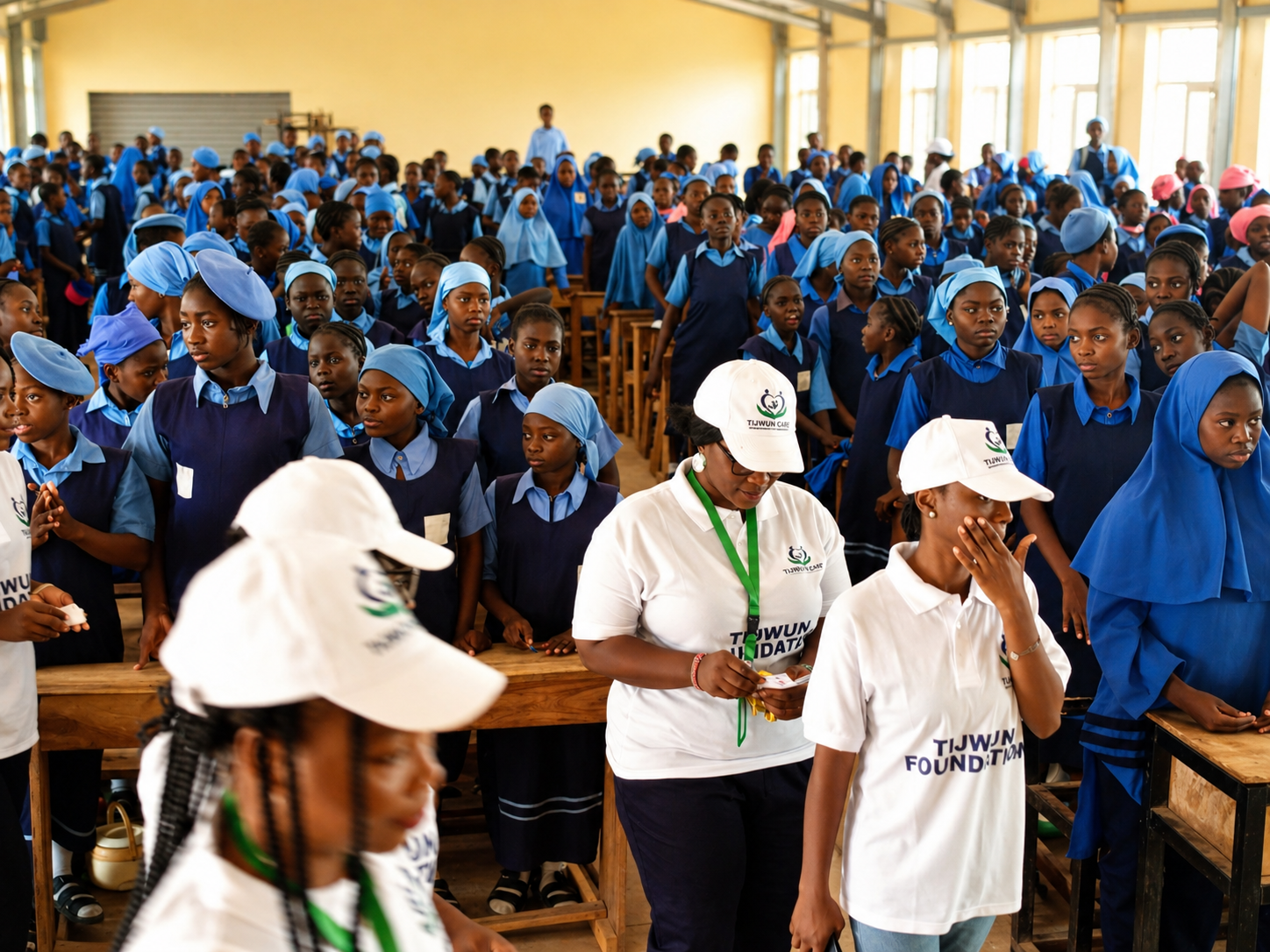
    At Government Girls College Yola, more than 400 girls participated in a STEM-focused outreach.

    A youth empowerment seminar at Zion Centre in Girei reached 50 young people, while a women’s leadership and empowerment intervention in Taraba State reached 45 women.

    These programme-level figures provide TIJCEF with something more valuable than general claims about community impact: identifiable records connecting beneficiaries to specific interventions.

    From Activities to Verifiable Programme Records

    Grassroots organisations frequently work in environments where immediate community needs take priority over sophisticated data systems.

    A programme may be successfully conducted and photographed, but important information can be lost if beneficiary numbers, locations, dates, activities and outcomes are not properly recorded.

    TIJCEF’s Evidence pillar seeks to address this challenge by treating documentation as part of programme implementation rather than an activity that begins only when an annual report or funding proposal is required.

    This means evidence can begin with relatively simple records.

    How many people attended?

    Where did the programme take place?

    Who were the implementing partners?

    What group was targeted?

    What activities were delivered?

    What materials were provided?

    What photographs, attendance records or participant feedback exist?

    These questions help turn an activity into a documented intervention.

    Programme Figures Show Different Levels of Reach

    TIJCEF’s existing programme records illustrate why intervention-level documentation matters.

    The Foundation should not simply combine every number into a large headline figure without retaining information about where those beneficiaries came from.

    For example, the 200 girls reached at Adroit International Academy can be linked to a specific school-based girls’ empowerment programme jointly implemented with Lead the Girl Foundation.

    The 400-plus girls reached at Government Girls College Yola belong to a different intervention focused on STEM exposure.

    The 50 young people reached at Zion Centre, Girei, represent participants in a youth empowerment seminar.

    The 45 women reached through the Taraba leadership and empowerment programme represent another distinct beneficiary group.

    Separating these records allows TIJCEF to understand not only how many people it reaches but who it is reaching and through what type of intervention.

    That is a more useful measure for programme management.

    Evidence Prevents Double Counting

    Maintaining programme-level records also helps prevent a common problem in development reporting: double counting.

    A person may participate in more than one programme.

    For example, an individual who attends a leadership programme could later volunteer during another TIJCEF intervention.

    If every attendance is automatically counted as a unique beneficiary, the organisation’s cumulative reach could become inflated.

    An evidence-based system should therefore distinguish between programme participations and unique beneficiaries wherever records make that possible.

    The distinction becomes increasingly important as TIJCEF expands.

    Programme participation tells the Foundation how much activity it has delivered.

    Unique-beneficiary data provide a better indication of how many individual people have actually been reached.

    Both measurements can be useful, but they answer different questions.

    Evidence Also Means Acknowledging What Is Not Known

    TIJCEF’s approach to evidence is equally important when programme information is incomplete.

    The Foundation’s 2023 outreach to an orphanage in Katsina, for instance, can be documented through the visit by its Executive Director and the donation of gifts to children.

    However, where a verified beneficiary figure is not available, an estimated number should not be introduced simply to make the programme appear larger.

    Similarly, TIJCEF’s January 2026 two-day leadership training can be reported through its duration, programme records and participation of the President of Public Speakers Network of Africa Foundation alongside other resource persons.

    Where the exact attendance figure has not been verified, it is more credible to leave that figure unstated than to estimate it.

    This principle is central to evidence-based reporting:

    What is not measured should not be presented as measured.

    That standard protects both beneficiaries and the organisation.

    Photographs Form Part of the Evidence Base

    Programme photography also plays an important role in TIJCEF’s documentation.

    Images from training sessions, school programmes and community activities provide visual records showing how interventions were implemented.

    They can document participation, programme settings, organisational branding and engagement between volunteers, resource persons and beneficiaries.

    But photographs have limitations.

    A photograph showing a crowded training hall cannot independently establish that 100 people attended.

    A photograph of smiling participants cannot prove that their income increased.

    A picture of students during a STEM outreach cannot establish that they subsequently pursued STEM careers.

    Photography therefore supports evidence but does not replace beneficiary records or outcome measurement.

    This distinction enables TIJCEF to use visual documentation responsibly.

    Beneficiary Numbers Are Outputs, Not Automatically Impact

    One of the most important elements of the Evidence pillar is distinguishing between outputs and outcomes.

    Reaching 400 girls is an output.

    Showing that those girls increased their STEM knowledge would be an outcome.

    Training 50 young people is an output.

    Showing that participants subsequently applied specific skills would represent a further result.

    Reaching 45 women through leadership programming is an output.

    Demonstrating increased participation in leadership or livelihood activities would require additional evidence.

    This distinction prevents programme reach from automatically being described as transformation.

    TIJCEF can celebrate beneficiary numbers while remaining accurate about what those figures actually demonstrate.

    Evidence Supports Sustainable Development

    TIJCEF’s approach also connects with the wider international emphasis on data in sustainable development.

    The United Nations’ Sustainable Development Goal framework relies heavily on indicators because progress cannot be assessed effectively without reliable information.

    SDG 17, for example, includes targets related to increasing the availability of high-quality, timely and reliable data for sustainable development. United Nations Sustainable Development Goal 17⁠�

    For a grassroots organisation, this does not require building a national statistical system.

    It begins with ensuring that programme information is recorded consistently.

    A reliable attendance sheet is evidence.

    A properly completed beneficiary questionnaire is evidence.

    A dated programme photograph is evidence.

    A partner confirmation is evidence.

    A pre- and post-programme assessment can provide evidence of change.

    A follow-up interview can provide evidence about what happened after an intervention.

    When combined systematically, these records create an increasingly strong picture of organisational performance.

    Evidence Strengthens Accountability to Partners

    Good programme data are also important for partnerships and fundraising.

    Potential donors and institutional partners increasingly expect organisations to demonstrate what they have previously implemented.

    An organisation able to provide programme dates, locations, beneficiary numbers, photographs, partners and measurable results is better positioned to demonstrate institutional capacity than one relying exclusively on broad statements.

    For TIJCEF, this means its programme history can become part of its organisational evidence base.

    The Adroit intervention demonstrates collaboration with another foundation.

    The Government Girls College programme demonstrates large-scale school engagement.

    The Girei seminar demonstrates youth-focused programming.

    The Taraba intervention provides evidence of women-focused engagement.

    The volunteer training demonstrates investment in internal capacity.

    And the Katsina outreach documents humanitarian engagement with vulnerable children.

    Together, these interventions begin to establish a traceable record of what the Foundation has done.

    Evidence Must Protect Beneficiaries

    Collecting information also creates responsibilities.

    TIJCEF’s programmes involve groups including children and young people, meaning data collection must respect privacy, dignity and safeguarding principles.

    Not every piece of information collected should be published.

    Beneficiary names, contact information and sensitive personal details should be handled carefully.

    Public impact reporting can rely primarily on aggregated information.

    Instead of identifying individual children, TIJCEF can report that 200 girls participated in a programme.

    Instead of publishing private questionnaire responses, results can be presented as aggregated percentages where appropriate.

    This allows evidence to strengthen accountability without compromising beneficiary dignity.

    Building a Culture of Evidence

    TIJCEF’s Evidence pillar ultimately goes beyond numbers.

    It represents an organisational culture in which claims are expected to have supporting records.

    That means being willing to report both achievements and limitations.

    It means distinguishing between direct beneficiaries and estimated reach.

    It means recognising partners rather than claiming collaborative programmes as exclusively TIJCEF interventions.

    It means acknowledging when a beneficiary number is unavailable.

    And it means avoiding impressive-looking percentages that have no underlying dataset.

    For a growing grassroots organisation, these practices can become important institutional strengths.

    TIJCEF’s programmes already provide the foundation.

    There are documented interventions involving 200 girls at Adroit International Academy, more than 400 girls at Government Girls College Yola, 50 young people in Girei and 45 women in Taraba, alongside other activities for which different forms of programme evidence exist.

    The task of the Evidence pillar is to ensure that those activities become more than memories or photographs.

    They become records.

    Those records become data.

    And where appropriate measurement exists, that data can eventually demonstrate outcomes.

    For TIJCEF, this is what evidence-based community development means: not merely saying that impact happened, but building the records capable of showing what was done, who was reached and what changed.
  • TIJCEF Strengthens Community Resilience Through Volunteer Training in Yola

    TIJCEF Strengthens Community Resilience Through Volunteer Training in Yola

    TIJCEF Strengthens Community Resilience Through Volunteer Training in Yola


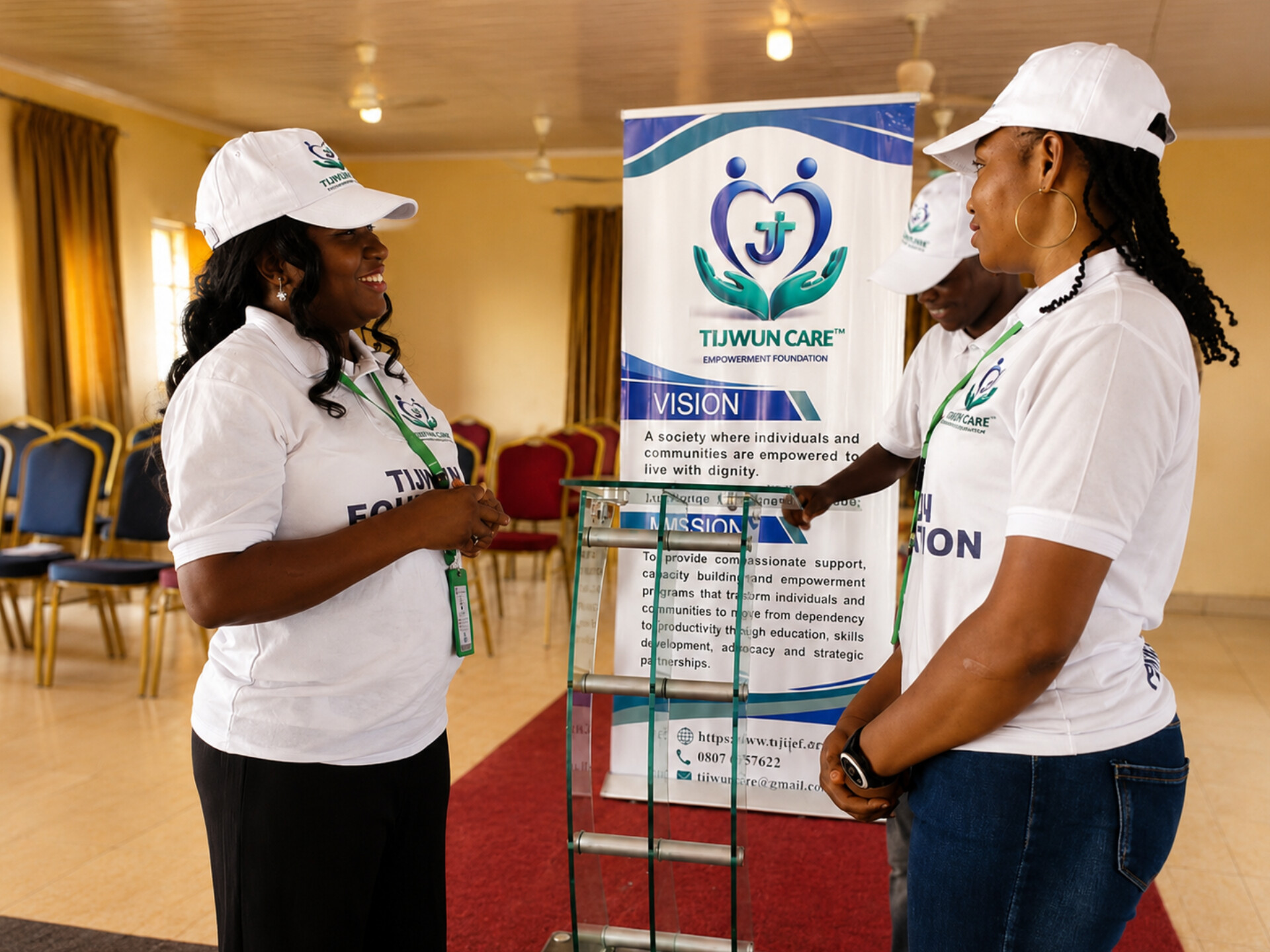
    The Tijwun Care and Empowerment Foundation (TIJCEF) strengthened its community-development capacity in April 2026 through a volunteer training programme in Yola, Adamawa State, bringing volunteers together to improve their preparedness for community service and the implementation of the Foundation’s grassroots interventions.


    The training formed part of TIJCEF’s efforts to build a stronger network of people capable of supporting programmes involving women, girls, young people and vulnerable communities.


    Rather than focusing exclusively on beneficiaries, the programme turned attention to an important group behind successful community interventions: volunteers.


    For TIJCEF, volunteers provide a connection between organisational plans and the communities in which programmes are implemented. Their ability to communicate, work with beneficiaries, understand programme objectives and represent the organisation responsibly can influence the quality of interventions delivered in the field.


    The Yola training therefore falls under TIJCEF’s Resilience pillar, reflecting the Foundation’s recognition that sustainable community action requires organisations themselves to develop people, structures and systems capable of continuing their work in changing circumstances.


    Training Volunteers for Community Service


    The April 2026 programme was organised as a capacity-building intervention for TIJCEF volunteers.


    The training provided an opportunity to bring individuals involved in the Foundation’s activities together within a structured learning environment.


    For a grassroots organisation, this type of internal capacity development is important.


    Community programmes may be carefully designed at organisational level, but implementation frequently depends on people working directly with beneficiaries.


    Volunteers can support registration.


    They can assist with programme coordination.


    They can communicate with participants.


    They can help distribute materials.


    They can support documentation.


    They may also represent the Foundation during interactions with schools, community leaders and other stakeholders.


    Training therefore provides an opportunity to strengthen how these responsibilities are carried out.


    TIJCEF’s decision to invest in volunteer development in Yola demonstrates that the Foundation’s community work is not limited to organising public-facing programmes.


    It also includes building the human capacity required to deliver those programmes.


    Volunteers Play an Important Role in Development


    Volunteerism contributes significantly to community development around the world.


    The United Nations Volunteers programme describes volunteerism as an important mechanism through which people participate in development and contribute to their communities.


    The 2022 State of the World’s Volunteerism Report estimated that approximately 862 million people aged 15 and above volunteer globally each month, demonstrating the scale at which voluntary action contributes to societies. “United Nations Volunteers – State of the World’s Volunteerism Report” (https://reference-url-citation.invalid/0)


    The global figure is not presented as a measure of TIJCEF’s volunteer network.


    Instead, it demonstrates the broader importance of voluntary service as a component of development.


    At community level, volunteers can help organisations extend their activities beyond what paid staff alone may be able to accomplish.


    This can be particularly important for grassroots organisations operating with limited financial and human resources.


    Building Resilience Within the Organisation


    TIJCEF’s Resilience pillar is often expressed through programmes designed to strengthen beneficiaries’ capacity to respond to social and economic challenges.


    The volunteer training represents another side of resilience: organisational resilience.


    An organisation becomes more resilient when knowledge and responsibility are distributed among multiple people rather than concentrated in a small leadership team.


    If only one or two individuals understand how programmes are organised, activities can become difficult to sustain when those individuals are unavailable.


    Training volunteers expands the number of people who understand the organisation’s work and can contribute to programme implementation.


    This can strengthen continuity.


    It can also improve the Foundation’s ability to respond when new opportunities or community needs arise.


    The April training therefore served not only the individuals participating but also TIJCEF’s wider programme structure.


    Supporting TIJCEF’s Growing Programme Activities


    The volunteer training came during a period of expanding activity for the Foundation.


    TIJCEF’s interventions have involved different beneficiary groups and programme settings, from girls’ empowerment in schools to leadership programmes, women’s empowerment and youth-focused activities.


    Each type of programme creates different logistical and human-resource demands.


    A school outreach involving hundreds of girls requires coordination.


    A leadership training programme requires participant management and documentation.


    A community intervention may require mobilisation and communication with local stakeholders.


    Humanitarian activities can require careful handling and distribution of materials.


    Volunteers can support these processes when they understand their responsibilities.


    Training therefore becomes part of programme quality rather than an activity separate from programme delivery.


    Community Engagement Requires Responsibility


    Working with communities also creates responsibilities.


    Volunteers may encounter children, women or other people in vulnerable situations.


    How volunteers communicate with participants and handle personal information can affect the dignity and safety of beneficiaries.


    This is especially important when programmes involve children.


    TIJCEF’s activities involving girls and other young people require attention to appropriate safeguarding and responsible documentation.


    Photographs, names and personal information should be handled carefully.


    Volunteers representing the Foundation also need to understand that their conduct can influence public trust in the organisation.


    A poorly managed interaction can damage a relationship with a school or community.


    Professional and respectful engagement can strengthen that relationship.


    Capacity development therefore contributes to more than operational efficiency. It can help establish common expectations regarding how an organisation interacts with the people it serves.


    Volunteer Development Supports the SDGs


    Volunteerism also has a recognised relationship with the Sustainable Development Goals.


    The United Nations has highlighted the role volunteers can play in implementing development initiatives and strengthening people’s participation in sustainable development.


    For TIJCEF, this connection is practical.


    Its community programmes already intersect with development areas such as gender equality, education, health, youth development and community wellbeing.


    Volunteers can contribute to these interventions through mobilisation, programme support, communication and documentation.


    Building their capacity can therefore strengthen the Foundation’s ability to contribute at grassroots level to wider development objectives.


    The scale of TIJCEF’s contribution remains local, but local action forms part of the broader development process.


    Training as an Investment in People


    Volunteer training also provides value to the volunteers themselves.


    People who participate in community service can gain exposure to programme organisation, teamwork, communication and social-development activities.


    For young volunteers in particular, these experiences can complement formal education.


    However, TIJCEF should distinguish between providing exposure and claiming outcomes that have not been measured.


    Participation in a volunteer training programme does not automatically prove that every participant acquired employment or developed a specific level of professional competence.


    The documented result is that TIJCEF conducted the training in Yola in April 2026 as part of its volunteer-capacity development.


    Any specific claims about knowledge improvement or subsequent professional outcomes would require supporting assessment or follow-up evidence.


    Strengthening the People Behind the Programmes


    The Yola training is significant because impact organisations are often judged almost entirely by the number of external beneficiaries they reach.


    Those figures are important, but they do not tell the entire story.


    Behind every well-organised intervention are people responsible for planning, mobilisation, logistics, communication and documentation.


    For TIJCEF, volunteers form part of that structure.


    Investing in them is therefore an investment in the Foundation’s capacity to serve communities effectively.


    The programme also demonstrates why resilience must be built internally as well as externally.


    An organisation that seeks to strengthen communities must itself develop systems and people capable of sustaining its work.


    Building a Stronger Foundation for Community Impact


    TIJCEF’s April 2026 volunteer training in Yola represents a documented step towards strengthening that internal capacity.


    The programme brought volunteers together.


    It focused on preparing people involved in the Foundation’s community work.


    And it strengthened the human network supporting TIJCEF’s expanding interventions.


    Unlike the Girei youth empowerment seminar, which directly focused on young beneficiaries, the Yola volunteer programme concentrated on people helping the Foundation deliver its mission.


    This makes the two Resilience interventions fundamentally different.


    One seeks to strengthen the resilience of young people facing social and economic challenges.


    The other strengthens the organisational and volunteer capacity required to continue serving communities.


    Together, they demonstrate the two sides of resilience reflected in TIJCEF’s work: building stronger people in communities and building a stronger organisation capable of standing with those communities.


    As TIJCEF continues expanding its programmes, trained and committed volunteers will remain important to translating plans into action.


    The April 2026 Yola programme therefore represents more than an internal meeting.


    It forms part of the infrastructure behind TIJCEF’s community impact the people who help move the Foundation’s mission from organisational objectives to practical service on the ground.

  • TIJCEF Gains Global Visibility Through United Nations SDG Partnerships Platform

    TIJCEF Gains Global Visibility Through United Nations SDG Partnerships Platform

    TIJCEF Gains Global Visibility Through United Nations SDG Partnerships Platform

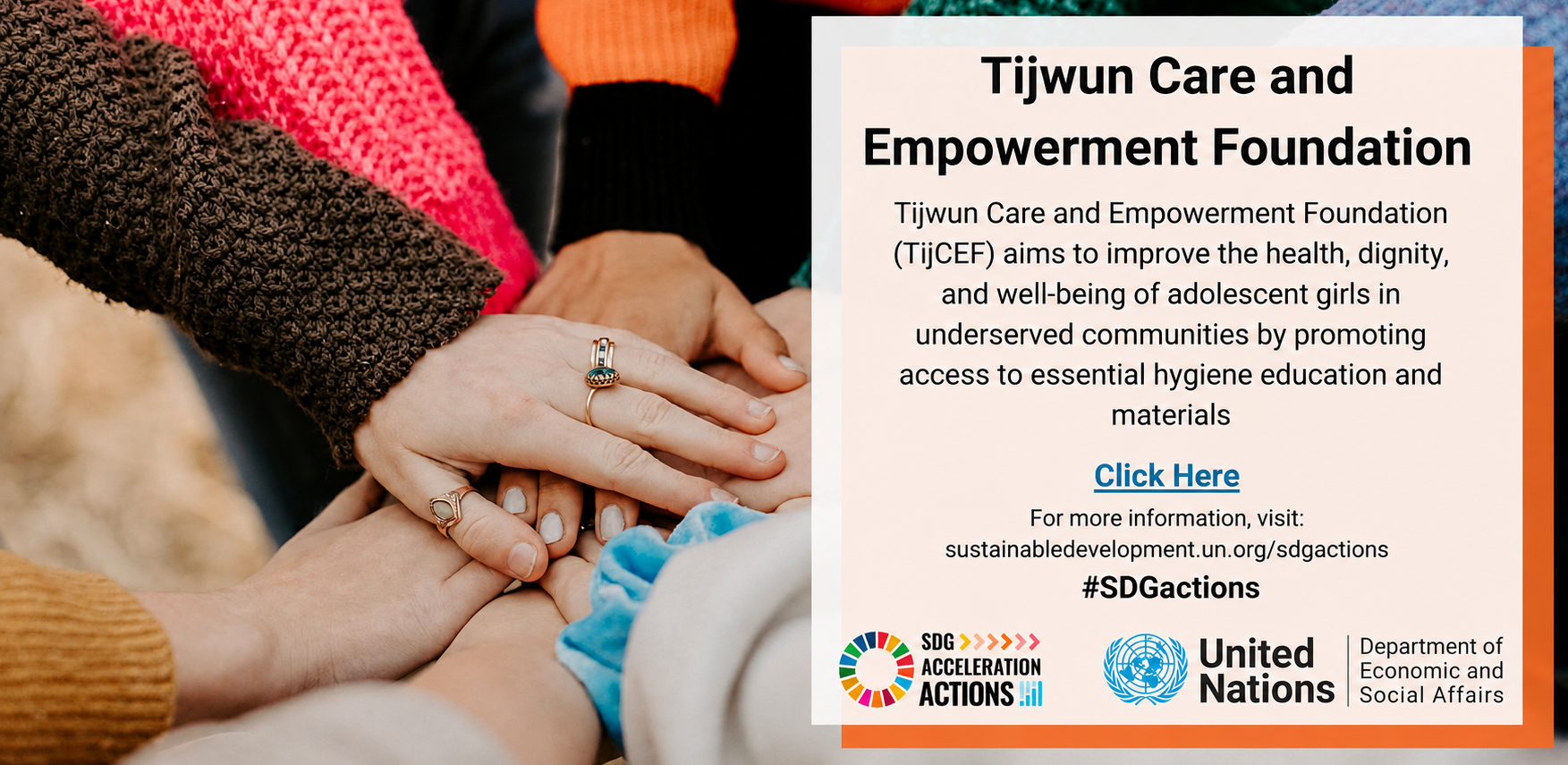
    Tijwun Care and Empowerment Foundation (TIJCEF) has strengthened its international visibility through its inclusion on the United Nations Sustainable Development Goals Partnerships Platform. The public listing presents TIJCEF’s work to a global audience interested in practical partnerships and community-based action supporting the Sustainable Development Goals.

    The development represents an important milestone for the Nigerian nonprofit organisation, which advances dignity, agency, resilience and evidence in partnership with women and young people, especially adolescent girls and underserved communities.

    TIJCEF’s public profile on the United Nations SDG Partnerships Platform highlights the Foundation’s commitment to improving hygiene practices and strengthening the health, dignity and well-being of girls through simple, appropriate tools and educational materials.

    The listing increases the visibility of TIJCEF’s community development approach, but it should be understood correctly. Inclusion on a public United Nations platform is not the same as receiving funding, accreditation or formal endorsement from the United Nations. It provides an international space where development commitments and partnerships can be publicly presented and discovered.

    Connecting Community Action to Global Goals

    The Sustainable Development Goals were adopted by United Nations Member States as a shared framework for addressing poverty, inequality, poor health, limited educational opportunities, gender discrimination, environmental degradation and other development challenges.

    Although the goals are global, progress depends heavily on action within communities. International agreements must eventually translate into safer schools, better information, greater access to sanitation, improved opportunities for women and young people, and more accountable institutions.

    TIJCEF’s work contributes to several interconnected goals. Its menstrual-health and school-hygiene activities support SDG 3: Good Health and Well-being. Its educational and STEM programmes contribute to SDG 4: Quality Education. Its focus on women and girls advances SDG 5: Gender Equality, while its WASH interventions relate directly to SDG 6: Clean Water and Sanitation.

    The Foundation’s climate education and environmental service activities also support SDG 13: Climate Action. Its emphasis on collaboration reflects SDG 17: Partnerships for the Goals.

    These relationships show why community problems should not always be treated in isolation. A girl’s ability to participate confidently in school may depend on access to menstrual-health information, suitable materials, clean water, safe toilets, supportive teachers and a school culture free from stigma.

    TIJCEF’s Four-Pillar Approach

    TIJCEF organises its work around four programme pillars: Dignity, Agency, Resilience and Evidence.

    Dignity focuses on menstrual health, WASH, safety and the well-being of women and girls. Agency promotes education, leadership, mentoring, life skills and opportunities that help people make informed decisions. Resilience addresses climate education, environmental responsibility and community preparedness. Evidence strengthens research, geospatial analysis, monitoring, evaluation and advocacy.

    Together, the pillars provide a framework through which TIJCEF can connect immediate community needs with long-term development.

    For example, distributing menstrual materials may respond to an urgent need, but sustainable menstrual dignity also requires education, functional sanitation facilities, supportive policies, responsible waste management and reliable evidence about the challenges girls experience.

    Building Public Credibility Through Transparency

    International visibility creates both opportunities and responsibilities. As more people discover TIJCEF through public platforms, the organisation must continue strengthening its governance, documentation, safeguarding and financial accountability.

    TIJCEF recognises that credibility is built through consistent action, honest reporting and respect for the people it serves. Programme figures should be supported by attendance records and activity reports. Photographs and beneficiary stories should be used with appropriate consent. Financial contributions should be documented and applied responsibly.

    The Foundation’s Evidence pillar is important to this commitment. Monitoring and evaluation help TIJCEF understand whether activities are reaching intended participants and producing useful results. Evidence also enables the organisation to acknowledge limitations, document lessons and improve future interventions.

    An Opportunity for Stronger Partnerships

    The United Nations platform listing can make it easier for potential partners, donors, researchers and development organisations to discover TIJCEF’s work. However, meaningful partnerships require more than online visibility.

    TIJCEF seeks partnerships that respect local knowledge, strengthen organisational capacity and produce measurable benefits for communities. Schools can provide access to students and support follow-up activities. Health professionals can contribute technical knowledge. Researchers can strengthen programme design and evaluation. Businesses can provide materials, technology and financial support.

    Local leaders and community members are equally important because they understand the social realities that shape participation and sustainability.

    Looking Ahead

    TIJCEF’s inclusion on the United Nations SDG Partnerships Platform is a meaningful step in the Foundation’s development. It places a community-driven Nigerian organisation within a global conversation about sustainable development and highlights the importance of locally led action.

    The milestone does not mark the completion of TIJCEF’s mission. Instead, it creates a stronger obligation to deepen impact, improve accountability and expand effective programmes responsibly.

    TIJCEF will continue working with women, girls, young people, volunteers, schools and community stakeholders to advance dignity, strengthen agency, build resilience and generate evidence for lasting change.

    Visit the TIJCEF website to learn more about the Foundation, explore its programmes and resources, or support the expansion of community-led development initiatives.

  • TIJCEF Completes STEM Empowerment Project, Reaches 400 Girls in Yola

    TIJCEF Completes STEM Empowerment Project, Reaches 400 Girls in Yola

    TIJCEF Completes STEM Empowerment Project, Reaches 400 Girls in Yola


    Tijwun Care and Empowerment Foundation (TIJCEF) successfully completed its STEM Empowerment Project on 23 February 2026 at Government Girls’ School, Yola, Adamawa State. The completed intervention reached 400 girls and strengthened their exposure to science, technology, engineering and mathematics as pathways to education, innovation, leadership and future economic opportunities.


    The project was implemented under TIJCEF’s Agency Pillar, which focuses on enabling women and girls to develop the knowledge, confidence, skills and opportunities required to make informed choices and shape their own futures.


    Rather than viewing the participating students only as beneficiaries, the initiative recognised them as individuals with ideas, ambitions and the capacity to contribute meaningfully to their communities. It encouraged the girls to see themselves as potential scientists, engineers, healthcare professionals, surveyors, researchers, environmental specialists, technology entrepreneurs and leaders.


    Building Agency Through STEM Education


    For TIJCEF, agency means more than giving assistance to women and girls. It involves creating opportunities that allow them to recognise their abilities, express their ideas, make informed decisions and pursue their aspirations without being restricted by gender stereotypes or limited exposure.


    The STEM Empowerment Project reflected this commitment by introducing 400 girls to the possibilities available within science and technology-related fields. It was designed to strengthen their confidence and encourage them to approach STEM subjects as areas in which they could participate, grow and succeed.


    Science, technology, engineering and mathematics are not simply academic subjects. They help young people develop curiosity, creativity, critical thinking and problem-solving abilities. These skills can support girls in making better decisions, responding to challenges and developing solutions that benefit their schools, families and communities.


    By bringing the intervention directly to Government Girls’ School, Yola, TIJCEF created an opportunity to engage the students within their learning environment. Schools are important spaces for building agency because the encouragement girls receive during their formative years can influence their educational choices, professional ambitions and willingness to take on leadership responsibilities.


    Helping Girls See New Possibilities


    Many girls have the ability to succeed in STEM but may not always receive the exposure, encouragement or opportunities needed to develop their interests. Social expectations and gender stereotypes can sometimes create the impression that technical and scientific fields are more suitable for boys.


    Limited access to role models and relevant learning opportunities can also affect how girls perceive their abilities and available career options. When these barriers are not addressed, talented girls may abandon their interests or avoid subjects and professions they are fully capable of pursuing.


    TIJCEF’s STEM Empowerment Project helped challenge these limitations by encouraging the participating girls to recognise that their gender does not determine their intelligence, potential or professional future.


    The initiative promoted a simple but important message: girls have the right and ability to learn, innovate, lead and contribute to technological and scientific development.


    This message is central to the Agency Pillar. A girl who believes in her ability to learn is more likely to ask questions, explore opportunities and make informed decisions about her education. She is also better positioned to resist limiting stereotypes and pursue a future based on her interests and abilities.


    From Beneficiaries to Future Problem-Solvers


    TIJCEF believes that girls should not only receive support but should also be equipped to become active problem-solvers and decision-makers.


    The 400 girls reached through the completed project represent 400 individual ambitions with the potential to influence families, communities and institutions. Each participant has the capacity to use knowledge and confidence gained through educational opportunities to contribute to society.


    A girl encouraged to pursue STEM today may become an engineer who designs essential infrastructure, a healthcare professional who improves community wellbeing, a researcher who generates new evidence, a surveyor who supports sustainable development or a technology entrepreneur who creates jobs.


    Others may apply STEM-related skills to agriculture, climate action, education, communication or environmental management. The ultimate value of STEM empowerment is not limited to the number of girls reached; it is also reflected in the choices they become confident enough to make and the solutions they may create in the future.


    A Completed Project with Lasting Significance


    Although the STEM Empowerment Project was completed on 23 February 2026, its significance extends beyond the completion date. The encouragement, exposure and sense of possibility created through the initiative can continue to influence the participants as they progress through their education.


    Project completion represents the achievement of a defined intervention, but it does not end TIJCEF’s commitment to promoting girls’ education and leadership. Instead, it provides a foundation for strengthening future initiatives and reaching more girls in other schools and communities.


    The completion of the project also demonstrates TIJCEF’s commitment to implementing practical interventions with clearly identified beneficiaries, locations and outcomes. Reaching 400 girls at Government Girls’ School, Yola, represents a measurable contribution to the Foundation’s broader goal of expanding opportunities for women and girls.


    Investing in Girls’ Agency


    Investing in girls’ agency benefits entire communities. Girls who are educated, confident and empowered to make informed decisions are better positioned to participate in leadership, innovation and economic development.


    As technology continues to transform education, healthcare, agriculture, environmental management and employment, girls must be prepared to participate not only as users of technology but also as creators, researchers and decision-makers.


    The completed STEM Empowerment Project at Government Girls’ School, Yola, reflects TIJCEF’s determination to ensure that girls are not left behind. By reaching 400 students, the Foundation created an opportunity for the participants to see STEM as accessible and their ambitions as achievable.


    The project stands as an important milestone under TIJCEF’s Agency Pillar. It demonstrates how targeted educational interventions can strengthen girls’ confidence, expand their awareness of future opportunities and encourage them to take greater ownership of their educational and professional journeys.


    Through initiatives of this nature, TIJCEF continues to advance a future in which women and girls have the knowledge, voice, confidence and opportunities required to make choices, pursue their aspirations and contribute meaningfully to society.


    Project status: Completed

    Completion date: 23 February 2026

    Beneficiaries reached: 400 girls

    Location: Government Girls’ School, Yola, Adamawa State

    TIJCEF pillar: Agency