TIJCEF Reaches Over 400 Girls Through STEM Outreach at Government Girls College Yola
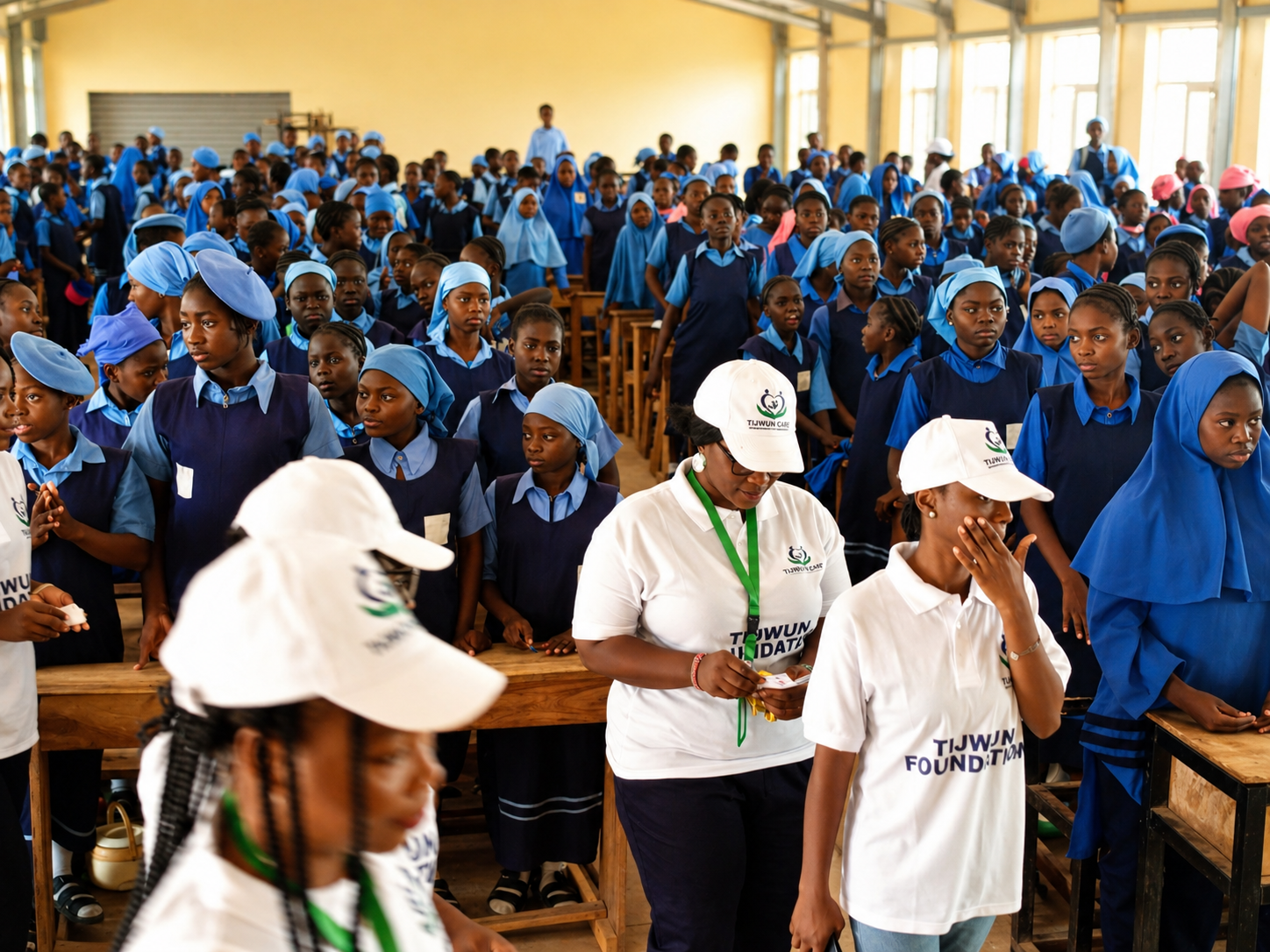
The Tijwun Care and Empowerment Foundation (TIJCEF) expanded its education and youth-development work in Adamawa State through a STEM-focused outreach at Government Girls College, Yola, where more than 400 girls were reached through an intervention designed to expose female students to opportunities in science, technology, engineering and mathematics.
The school-based programme brought TIJCEF directly into one of Yola’s girls’ educational environments, creating an opportunity to engage hundreds of students around STEM education and the importance of preparing girls to participate in fields that are increasingly shaping education, employment, innovation and economic development.
With over 400 girls reached, the Government Girls College intervention represents one of TIJCEF’s larger documented school outreaches.
The programme falls under the Foundation’s Evidence pillar, reflecting TIJCEF’s commitment to using education, knowledge and measurable programme records to support interventions addressing identified development gaps.
The beneficiary figure provides a clear measure of the programme’s direct reach: more than 400 female students participated in the outreach.
Rather than presenting attendance as proof that every participant subsequently entered a STEM career, TIJCEF reports the programme for what the available evidence establishes—a large-scale school intervention that brought STEM awareness and exposure directly to girls in Yola.
More Than 400 Girls Reached in One School
The scale of the Government Girls College programme is significant within TIJCEF’s programme portfolio.
More than 400 girls were directly reached through the intervention.
This figure refers to students who participated in the programme and does not include estimated family members, friends or other people who may subsequently have heard about the outreach.
Maintaining that distinction is important to TIJCEF’s evidence-based reporting.
The programme placed the students themselves at the centre of the activity.
Government Girls College provided a particularly relevant environment for the intervention because an all-girls school enables STEM messaging to reach a concentrated population of female students at a stage when educational interests and career ambitions are developing.
For TIJCEF, the programme was therefore not simply about increasing the number of people attending an outreach.
It was about reaching a specific population with a specific development message.
Why STEM Exposure for Girls Matters
Science and technology increasingly influence almost every major sector of modern society.
Agriculture is becoming more data-driven.
Healthcare increasingly uses digital technologies.
Environmental management depends heavily on scientific information.
Engineering remains central to infrastructure development.
Geospatial technology supports agriculture, urban planning, disaster management and environmental monitoring.
Artificial intelligence and digital technologies are also changing how businesses and public institutions operate.
Girls therefore need opportunities to see themselves as potential participants in these fields.
Yet gender disparities remain within science and technology globally.
UNESCO has reported that women account for only about one-third of researchers worldwide, illustrating the continuing gender imbalance in scientific research. UNESCO – Women in Science�
The statistic is global and should not be interpreted as describing the individual circumstances of the students reached at Government Girls College Yola.
It does, however, provide context for why initiatives encouraging girls’ participation in STEM remain relevant.
Bringing STEM Conversations Into the School Environment
One strength of the TIJCEF intervention was its location.
Instead of waiting for students to independently discover STEM opportunities outside school, the outreach brought the conversation directly into their educational environment.
School-based interventions can help reduce the distance between young people and information about educational and career opportunities.
Students who have limited interaction with professionals outside their immediate communities may not always understand the range of careers connected to subjects they study in school.
Mathematics, for example, can lead into engineering, data science, surveying, economics, computing and numerous technical careers.
Geography can connect with geospatial science, remote sensing, environmental management and urban planning.
Physics can lead towards engineering and technological innovation.
Computer science increasingly connects with almost every sector.
STEM outreach can therefore help students understand that school subjects are not isolated academic requirements but potential pathways into future careers.
Evidence Begins With Knowing Who Was Reached
The Government Girls College programme is particularly relevant to TIJCEF’s Evidence pillar because it demonstrates one of the simplest but most important principles of development reporting: organisations should know how many people their programmes actually reach.
For this intervention, the documented reach is over 400 girls.
That provides TIJCEF with an identifiable programme output.
It is different from claiming that more than 400 girls became scientists.
It is different from claiming that every participant developed an interest in technology.
And it is different from claiming that academic performance improved after the programme.
Those would be outcome or impact claims requiring additional evidence.
TIJCEF therefore separates reach from transformation.
The Foundation can demonstrate that more than 400 girls received STEM-focused exposure through the intervention.
Any longer-term educational effects would require additional programme records or follow-up evidence.
Building Girls’ Digital and Technical Skills Is a Wider Priority
Nigeria’s development partners have increasingly placed attention on equipping children and young people with skills required for a changing economy.
UNICEF reported that in 2025, close to 590,000 children in Nigeria developed technical, vocational and foundational skills, including more than 270,000 girls.
The figures demonstrate the scale of the wider effort to ensure young Nigerians acquire relevant skills for education, employment and economic participation.
TIJCEF’s programme operates at a grassroots level compared with interventions of that national scale.
Its contribution was geographically specific: more than 400 girls in a school in Yola.
But grassroots and large-scale programmes do not necessarily compete.
National initiatives can address systems and large populations, while community organisations can bring opportunities directly into individual schools and communities.
STEM and Sustainable Development
The programme also connects with several Sustainable Development Goals.
Most directly, it supports the objectives of SDG 4 – Quality Education, which includes expanding access to relevant knowledge and skills.
It also intersects with SDG 5 – Gender Equality, particularly efforts to expand opportunities for women and girls.
The United Nations recognises education and women’s participation in technology as important components of sustainable development. United Nations Sustainable Development Goal 4�
For TIJCEF, connecting programmes with the SDGs does not mean claiming responsibility for achieving those global goals.
Rather, it provides a framework showing how a local intervention contributes to broader development priorities.
The Government Girls College outreach represents a community-level contribution to increasing girls’ exposure to STEM education.
More Than a Beneficiary Number
Although 400-plus participants provide the headline figure, each number represents an individual student.
Among those girls may be future engineers, health professionals, scientists, environmental specialists, programmers, researchers, surveyors, teachers, entrepreneurs and innovators.
TIJCEF cannot predict which paths the students will eventually take.
Nor should one outreach be credited for future achievements that will depend on education, family circumstances, individual choices and many other factors.
What the Foundation can demonstrate is that the girls were given an opportunity to engage with STEM-focused information through an organised intervention.
That exposure is the immediate contribution of the programme.
Documenting Programmes Strengthens Accountability
The Government Girls College outreach also demonstrates why documentation is central to TIJCEF’s Evidence pillar.
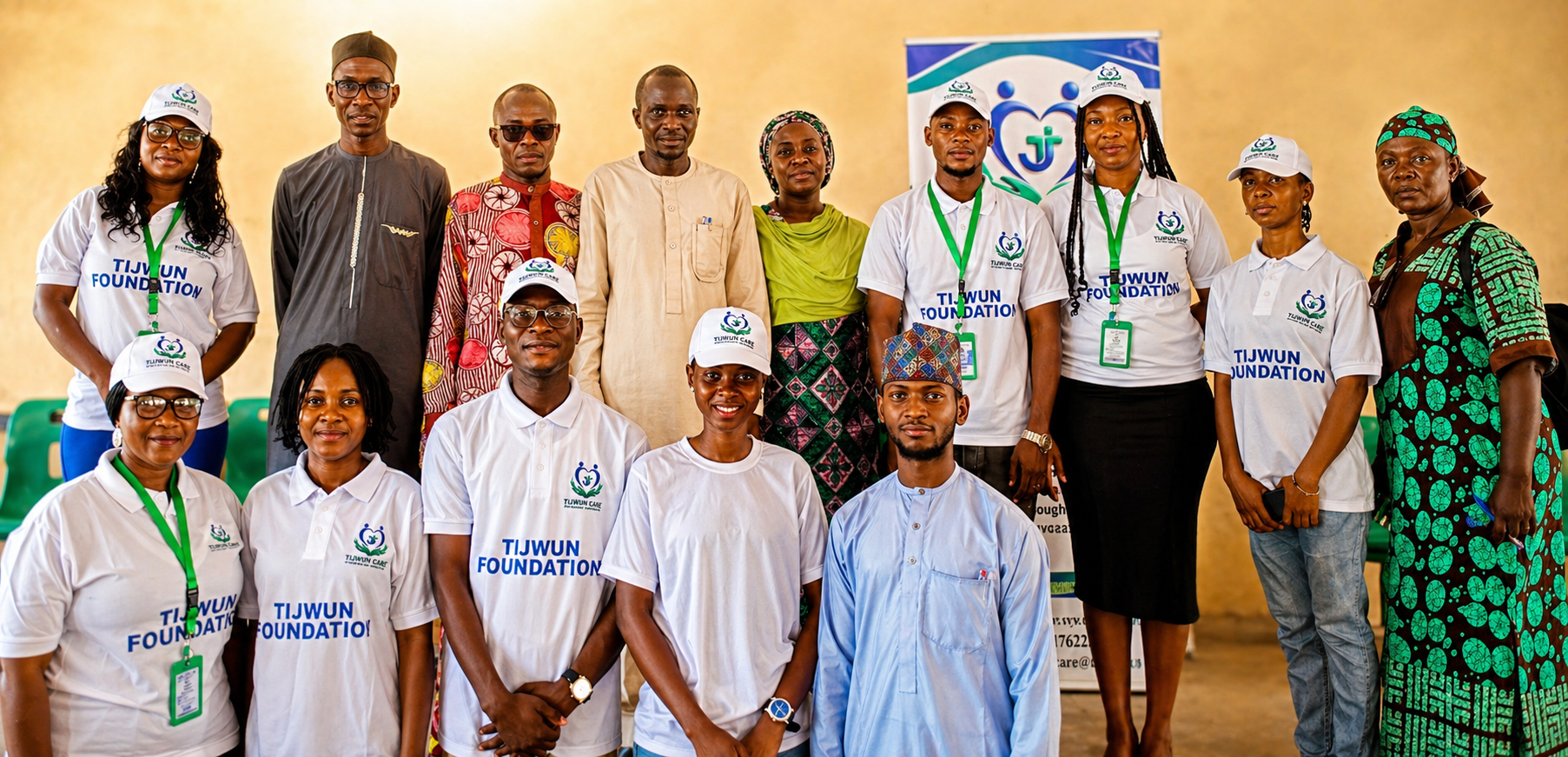
Programme photographs can establish that activities occurred.
Beneficiary or attendance records can establish reach.
Partner and school records can establish institutional participation.
Where feedback is collected, it can provide additional evidence about participants’ experiences.
Together, these records enable TIJCEF to report programmes using evidence rather than relying entirely on promotional language.
This approach is increasingly important for civil society organisations seeking partnerships and funding.
Potential partners need to understand not simply what an organisation says it does, but what activities can be demonstrated through records.
A documented programme reaching more than 400 girls provides a stronger institutional record than an unsupported statement that an organisation “empowers thousands.”
Building a Record of Girls-Focused Interventions in Yola
The Government Girls College programme also adds to TIJCEF’s growing record of engagement with girls in Yola.
The Foundation has worked with girls through different school-based interventions, but the programmes have not been identical.
At Adroit International Academy, TIJCEF collaborated with Lead the Girl Foundation in an empowerment intervention reaching 200 girls.
The Government Girls College programme, by contrast, centred specifically on STEM exposure and reached more than 400 girls.
Maintaining this distinction prevents TIJCEF’s programme stories from becoming repetitive.
One intervention addresses broader girls’ empowerment.
The other focuses on science, technology, engineering and mathematics.
Together, they demonstrate different approaches to expanding opportunities for girls.
Over 400 Girls, One Measurable Programme
The strongest evidence from the Government Girls College Yola intervention remains straightforward.
More than 400 girls were reached through TIJCEF’s STEM outreach.
The programme took STEM-focused engagement directly into a girls’ school environment and provided students with exposure to fields increasingly important to Nigeria’s development and the global economy.
TIJCEF does not need to exaggerate that achievement.
More than 400 girls participating in a documented STEM intervention is itself a significant programme output.
Under the Foundation’s Evidence pillar, the outreach demonstrates the value of connecting development activities with measurable records.
It also reinforces a wider message: girls should not merely be consumers of future technologies. They should have opportunities to become the scientists, engineers, researchers, technologists and innovators who help create them.
For TIJCEF, reaching more than 400 girls at Government Girls College Yola represents a practical contribution towards opening that conversation and ensuring that girls are included in it from the beginning.