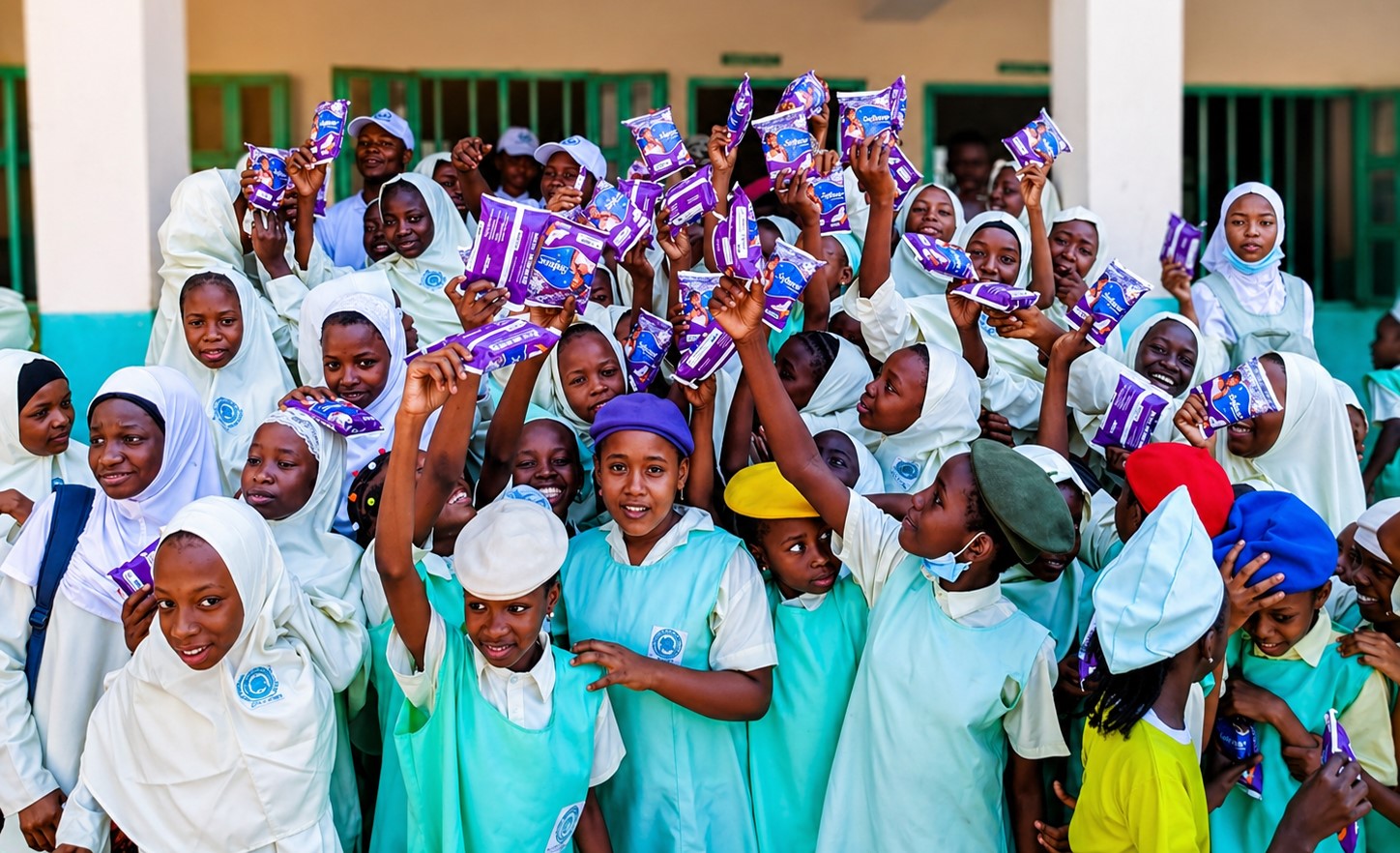
TIJCEF, Lead the Girl Foundation Empower 200 Girls at Adroit International Academy Yola
The Tijwun Care and Empowerment Foundation (TIJCEF), in partnership with Lead the Girl Foundation, has carried out a girls’ empowerment programme at Adroit International Academy in Yola, Adamawa State, reaching 200 girls as part of efforts to strengthen confidence, personal development and awareness of opportunities among young girls.
The school-based intervention brought the two organisations directly into an educational environment where they engaged the students on issues connected to their development and future.
According to programme records, 200 girls participated in the outreach, providing a documented beneficiary figure for the intervention and making it one of TIJCEF’s girls-focused activities in Yola.
The programme aligns with TIJCEF’s Dignity pillar, through which the Foundation promotes the principle that girls and other beneficiaries should not simply receive assistance but should be recognised as individuals with abilities, aspirations and the potential to contribute meaningfully to their communities.
The collaboration with Lead the Girl Foundation also placed partnership at the centre of the intervention, demonstrating how civil society organisations can combine their platforms and experience to reach young people within schools.
200 Girls Reached Through Joint Intervention
At Adroit International Academy, the focus was on the girls themselves.
Rather than organising a broad community event where the target population could be difficult to determine, the school setting enabled TIJCEF and Lead the Girl Foundation to work with a clearly identified group.
By the end of the intervention, 200 girls had been reached.
The figure is significant to TIJCEF’s reporting because it represents the number of direct participants rather than an estimated indirect audience.
For the Foundation, the outreach added to its growing engagement with girls and young people in Adamawa State and reinforced its commitment to bringing development programmes closer to beneficiaries within their everyday environments.
Schools are particularly important locations for this type of intervention because they provide opportunities to engage girls during a period when many are developing their educational ambitions, confidence and ideas about future careers.
Partnership Drives the Yola Outreach
The programme was jointly undertaken by TIJCEF and Lead the Girl Foundation, making collaboration an important part of the intervention.
Both organisations worked together to reach the girls at Adroit International Academy rather than the activity being implemented by TIJCEF alone.
For community-based organisations, partnerships can help extend the reach of programmes while bringing different experiences and approaches into a single intervention.
The Adroit programme provides a practical example of this approach.
It also demonstrates the role schools can play as partners in community development. By providing access to students in an organised learning environment, educational institutions can serve as platforms through which civil society organisations deliver complementary programmes on leadership, personal development, health, skills and other issues affecting young people.
Wider Evidence Shows Why Girls-Focused Programmes Matter
The intervention in Yola took place against a wider national environment in which millions of Nigerian girls and adolescents continue to face challenges affecting education, skills development and their transition into adulthood.
Nigeria has nearly 105 million children and adolescents aged 0–17, representing about half of the country’s population, according to the Federal Government and UNICEF’s updated situation analysis. The scale means that investments in children and adolescents have major implications for Nigeria’s future human capital.
Recent evidence also demonstrates that girls can face barriers extending beyond access to a classroom.
UNICEF’s research on adolescent girls in northern Nigeria identified social and gender norms, child marriage, adolescent pregnancy and restrictions around digital participation among factors capable of limiting girls’ education and development. The research also identified skills development, mentorship, role models and community engagement among approaches that can strengthen opportunities for girls.
While the research focused particularly on north-western Nigeria, it illustrates the broader importance of ensuring that girls have opportunities to develop skills, interact with role models and participate in programmes that expand their understanding of what is possible.
The Adroit International Academy programme represents a grassroots contribution to that broader development objective within Adamawa State.
Skills Development Is Becoming Increasingly Important
Girls’ empowerment is also increasingly connected to skills development.
UNICEF reported that close to 590,000 Nigerian children developed technical, vocational and foundational skills in 2025, including more than 270,000 girls.
The scale of these national programmes is far beyond that of a grassroots organisation such as TIJCEF, but the comparison demonstrates why local interventions remain relevant.
Large national programmes can reach hundreds of thousands of beneficiaries, while smaller organisations can work directly within individual schools and communities.
TIJCEF and Lead the Girl Foundation’s engagement with 200 girls represents this local approach.
It allows interventions to reach students within their immediate environment while creating opportunities for future relationships between schools and civil society organisations.
Dignity at the Centre of the Programme
The Adroit intervention is classified under TIJCEF’s Dignity pillar because the Foundation’s approach to dignity extends beyond the distribution of material assistance.
For TIJCEF, dignity includes recognising that young girls have ambitions and abilities that deserve encouragement and development.
The 200 students reached through the programme were therefore not treated merely as statistics or recipients.
They were the central participants in the intervention.
This approach is consistent with emerging evidence on adolescent-girl programming.
UNICEF’s research with girls and communities in northern Nigeria found that adolescent girls themselves identified access to skills, female role models, education and greater inclusion as important elements of their development.
Such findings strengthen the case for programmes that create direct engagement with girls rather than designing interventions without their participation.
Reporting the Impact Responsibly
For TIJCEF, the most clearly documented result of the Adroit International Academy programme is its reach of 200 girls.
The Foundation is not presenting unsupported percentages claiming that confidence, academic performance or career aspirations increased by a particular amount because such outcomes would require specific baseline and follow-up measurements.
Instead, the programme provides a verified record of a girls-focused intervention delivered through partnership at a school in Yola.
This distinction is important to TIJCEF’s approach to evidence-based reporting.
Photographs and programme documentation can establish that an activity took place. Attendance or beneficiary records can establish the number reached. More complex claims about behavioural or educational change require additional evidence.
By separating these levels of evidence, TIJCEF can report its work without exaggerating its achievements.
A Contribution to Girls’ Development in Adamawa
The challenges facing Nigerian girls are too extensive for any single organisation to address.
Government remains responsible for ensuring access to quality education and creating policies that protect and expand opportunities for children. Schools, families, civil society organisations, communities and development partners also have important roles.
The intervention at Adroit International Academy represents TIJCEF and Lead the Girl Foundation’s contribution at the grassroots level.
For the school, it brought an additional girls-focused development activity directly to students.
For the two organisations, it provided an opportunity to translate their commitment to girls’ empowerment into direct engagement.
Most importantly, 200 girls participated.
That number represents 200 individual students reached through the programme rather than an abstract development statistic.
As TIJCEF continues its community interventions, the Adroit International Academy programme provides documented evidence of how partnership can translate organisational values into practical action.
The programme also reinforces the Foundation’s Dignity pillar: the belief that every girl should be recognised not simply according to the challenges she faces, but according to the potential she possesses.
For TIJCEF and Lead the Girl Foundation, reaching 200 girls in Yola was one practical contribution towards creating that opportunity.