Blog

  • Inside TIJCEF’s School Takeover Day: Staff, Volunteers Lead Full-Day Learning in Yola

    Inside TIJCEF’s School Takeover Day: Staff, Volunteers Lead Full-Day Learning in Yola

    Inside TIJCEF’s School Takeover Day: Staff, Volunteers Lead Full-Day Learning in Yola

    The Tijwun Care and Empowerment Foundation (TIJCEF) has taken its education intervention beyond the conventional model of brief school visits by deploying its staff and volunteers to a community school in Yola, Adamawa State, where they spent an entire school day participating in and supporting learning activities from the opening period until closing time.

    The intervention formed part of TIJCEF’s School Takeover Day, a recurring programme conducted twice each year in which the Foundation selects a school and mobilises staff and volunteers to spend a full day working within the school environment.

    Rather than arriving for a short motivational talk, presentation or ceremonial visit, the TIJCEF team participates in the school’s activities throughout the day. Staff and volunteers interact with pupils, support classroom learning and work alongside members of the school community until the end of the school day.

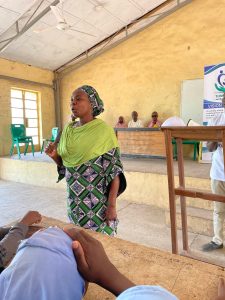
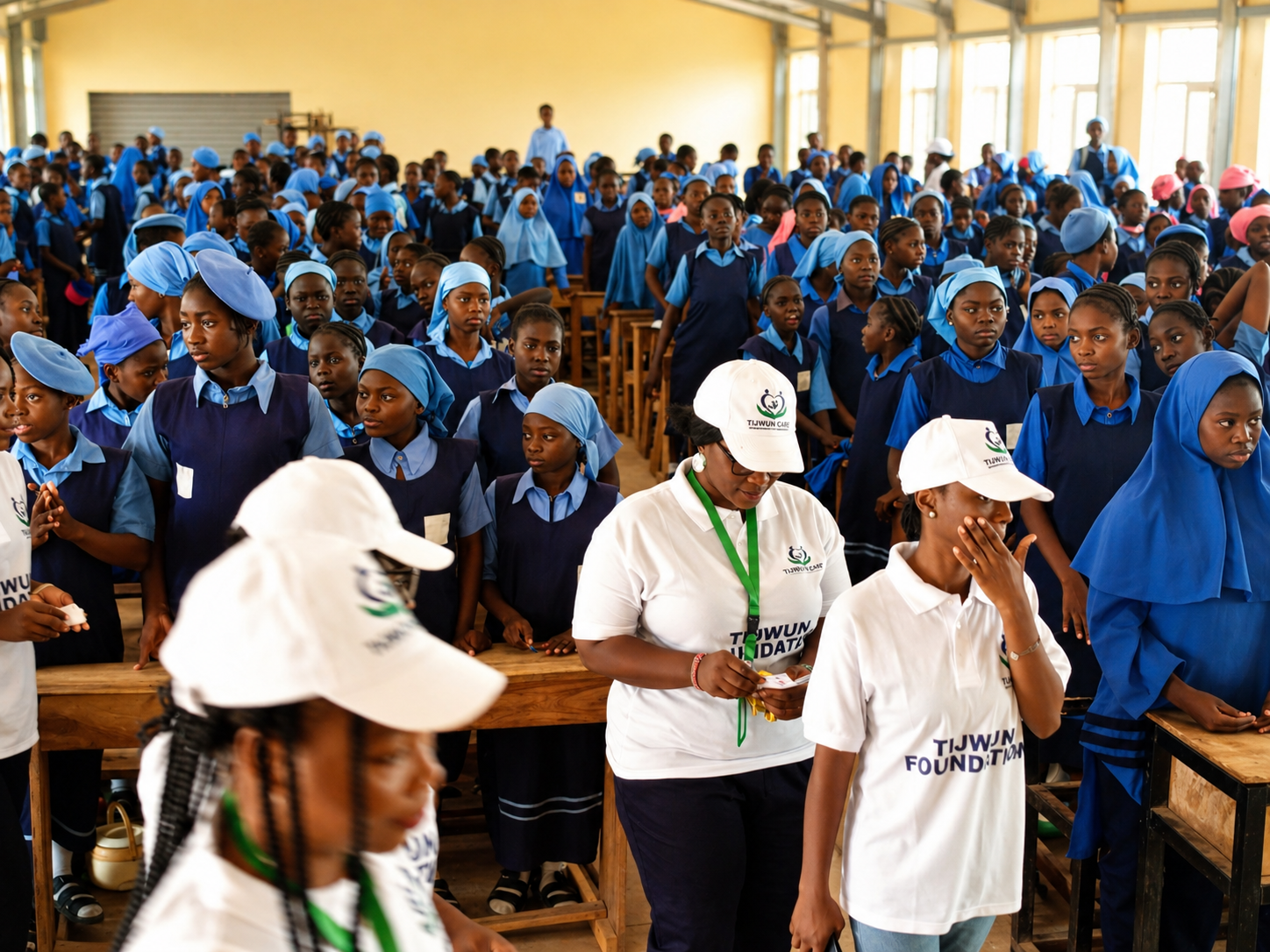
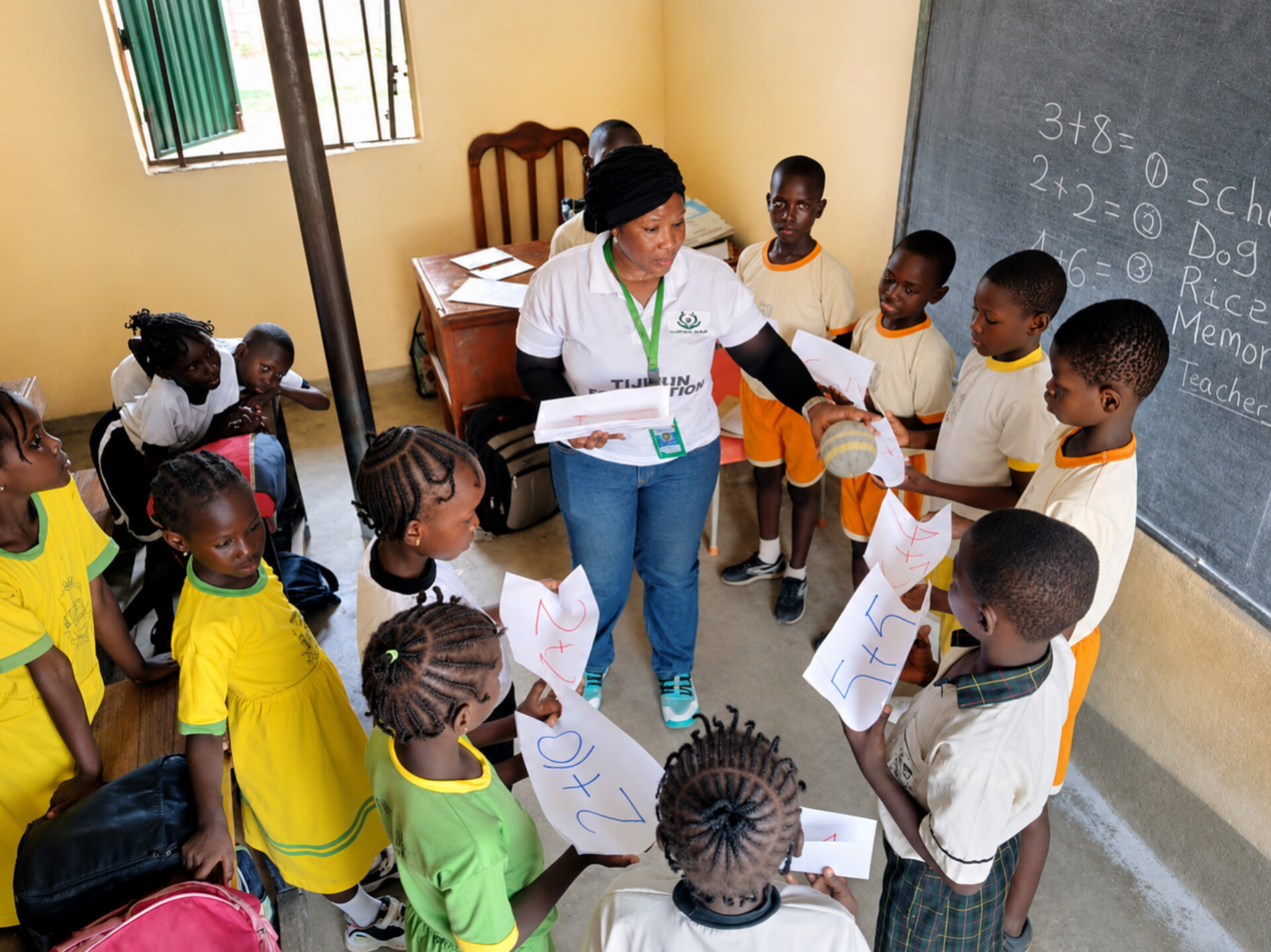
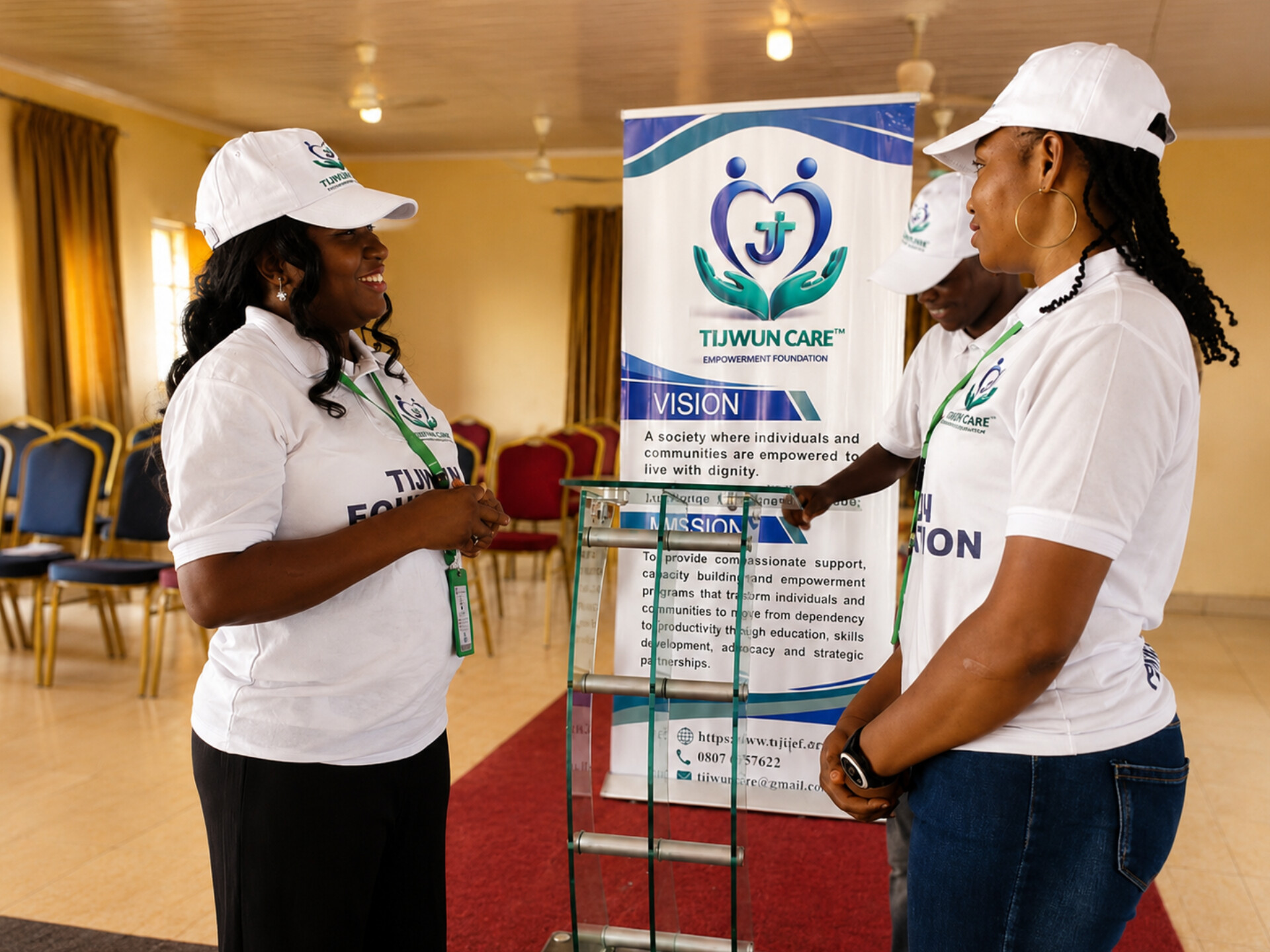
    Photographs from the Yola edition document both classroom and wider school engagement. In one of the classroom sessions, pupils can be seen participating in an interactive numerical exercise while a TIJCEF team member guides the activity. Other photographs show children, school personnel and members of the Foundation together within the school premises.

    The programme represents TIJCEF’s attempt to make community education support more participatory: instead of observing a school from outside, its team enters the learning environment and experiences a full school day alongside the pupils and teachers.

    From School Visit to Full-Day Participation

    School outreaches by civil society organisations can sometimes last only a few hours. Visitors arrive, address pupils, distribute materials, take photographs and leave.

    TIJCEF’s School Takeover Day uses a different model.

    For the selected day, staff and volunteers commit themselves to the school from the beginning of activities through the closing period.

    This extended presence allows the Foundation to engage pupils in a setting closer to their normal learning experience.

    The programme is not intended to permanently replace qualified teachers or school administrators. Instead, it provides a designated day during which TIJCEF personnel and volunteers contribute their time, knowledge and energy to supporting school activities and engaging directly with children.

    Conducting the programme twice annually also distinguishes it from an isolated outreach.

    Each edition becomes another opportunity for the Foundation to take its education work into a school environment and develop practical experience that can inform subsequent interventions.

    Learning Takes Centre Stage

    The Yola edition demonstrated the educational character of the programme.

    Classroom photographs show pupils actively participating rather than sitting through a ceremonial presentation.

    Children held handwritten learning materials while a TIJCEF team member facilitated an interactive exercise. The classroom board and materials visible during the activity further document that the engagement took place within an active learning setting.

    That distinction is important.

    TIJCEF’s involvement was not limited to gathering pupils for photographs. The team participated in activities during the school day.

    Interactive engagement can also provide volunteers with a closer understanding of how children respond to different approaches to learning.

    Some children may respond quickly to verbal questions. Others may participate more confidently when learning involves physical objects, group interaction or visual materials.

    Spending a full day within the school gives volunteers greater exposure to these differences than would normally be possible during a brief visit.

    Nigeria’s Foundational Learning Challenge Gives the Programme Wider Relevance

    TIJCEF’s intervention comes against the background of a serious learning challenge facing Nigerian children.

    UNICEF has warned that Nigeria faces a severe foundational learning crisis, reporting that more than 70 per cent of children lack foundational literacy and numeracy skills. The organisation has highlighted teacher capacity, learning resources and the quality of instruction among issues requiring sustained attention. UNICEF Nigeria – Enabling Teachers, Educating Children⁠�

    That national statistic should not be interpreted as an assessment of the pupils involved in TIJCEF’s Yola programme.

    No learning assessment from the School Takeover Day has been presented to establish the literacy or numeracy performance of participating pupils.

    Instead, the national evidence provides context for why initiatives that bring additional attention to children’s learning remain relevant.

    TIJCEF’s programme cannot solve Nigeria’s foundational learning crisis, nor is a twice-yearly intervention a substitute for sustained classroom teaching.

    Its contribution is much more specific: mobilising people and resources to spend a full school day supporting learning and engaging directly with a school community.

    Teachers Remain Central to Education

    The School Takeover Day also provides an opportunity to recognise rather than diminish the role of teachers.

    Teachers perform this work every school day.

    What TIJCEF staff and volunteers experience for a single day is part of the daily responsibility carried by educators throughout the academic year.

    The intervention can therefore provide civil society volunteers with greater appreciation of the realities of classroom management and teaching.

    UNESCO estimates that the world will need 44 million additional primary and secondary teachers by 2030 to meet universal education goals, illustrating the importance of teachers to the global education system. UNESCO – Global Report on Teachers⁠�

    The TIJCEF programme should consequently be understood as support for education, not substitution for professional educators.

    Volunteers Move From Observers to Participants

    The School Takeover Day also gives TIJCEF volunteers a practical role.

    Volunteerism can easily become symbolic when participants are present only during opening ceremonies or photographs.

    A full-day model requires more.

    Volunteers have to interact with pupils.

    They have to participate in activities.

    They experience the rhythm of a school day.

    They also have an opportunity to observe some of the practical realities affecting learning within a community-school environment.

    That experience can be valuable to TIJCEF itself.

    Community organisations make stronger programme decisions when they understand the environments in which beneficiaries live and learn.

    A photograph or written report can communicate some information about a school.

    Spending a complete day there can provide a different level of exposure.

    Twice a Year Creates Opportunity for Better Measurement

    Because TIJCEF conducts the School Takeover Day twice annually, the programme also presents an opportunity to strengthen the Foundation’s evidence-based approach.

    Each edition can be documented using a consistent framework.

    TIJCEF can record the school selected, number of pupils directly participating, number of staff and volunteers deployed, subjects or activities supported, duration of engagement and feedback from teachers and pupils.

    Where appropriate, short learning assessments could also be introduced.

    For example, if an edition includes a specific numeracy activity, a simple exercise administered before and after the session could provide evidence about immediate learning.

    The Foundation should not manufacture improvement percentages in advance.

    Results should come from actual assessments.

    Over several editions, such records could transform School Takeover Day from a recurring volunteer activity into a programme with an increasingly strong evidence base.

    A Programme That Can Travel Beyond One School

    Another strength of the model is its potential flexibility.

    Because School Takeover Day is based on mobilising staff and volunteers around a selected school, future editions can reach different communities.

    This allows TIJCEF to take the programme to schools where engagement could be particularly valuable rather than concentrating every edition in one institution.

    The twice-yearly structure can also create continuity without requiring TIJCEF to claim that it operates the schools involved.

    The Foundation comes in for a defined intervention, works with the existing school community and completes the edition at the end of the school day.

    The school remains under its normal administration.

    This distinction is important when describing the term “takeover.”

    TIJCEF is not assuming administrative ownership or control of a school. School Takeover Day is the programme concept used to describe a full-day intervention in which TIJCEF’s staff and volunteers immerse themselves in school activities from opening until closing.

    Supporting SDG 4 at Grassroots Level

    The programme also aligns with the broader objectives of Sustainable Development Goal 4, which seeks inclusive and equitable quality education and lifelong learning opportunities.

    Among its targets are improvements in access to education and the acquisition of relevant learning outcomes. United Nations – Sustainable Development Goal 4⁠�

    TIJCEF’s contribution is necessarily local.

    A community organisation cannot achieve a national or global education target through a single programme.

    But global development objectives ultimately have to translate into activities affecting real people in real communities.

    For TIJCEF, School Takeover Day provides one mechanism for making that connection.

    More Than a Photograph

    The images emerging from the Yola programme tell two complementary stories.

    The group photograph documents the relationship between TIJCEF personnel, school representatives and pupils.

    The classroom photograph goes further by showing the programme in action.

    It captures children participating in an educational exercise while a member of the TIJCEF team facilitates the activity.

    That second image is particularly important because it demonstrates what distinguishes School Takeover Day from an ordinary courtesy visit.

    The Foundation was not simply present at the school.

    Its people were participating in the school day.

    From Opening Bell to Closing Time

    The defining feature of TIJCEF’s School Takeover Day is ultimately its duration and level of participation.

    The team arrives for the start of the school day.

    Staff and volunteers engage with the school community.

    They participate in learning and other activities.

    And they remain through the closing period.

    Then, later in the year, the programme happens again.

    That twice-yearly commitment gives TIJCEF an opportunity to develop School Takeover Day into a recognisable part of its education portfolio while progressively improving how each edition is documented and evaluated.

    The Yola intervention demonstrates what the concept looks like in practice: TIJCEF staff and volunteers leaving their normal routines for a day and entering the everyday learning environment of children.

    It does not replace teachers.

    It does not claim to solve Nigeria’s education challenges in a day.

    And it should not be measured merely by photographs taken or hours spent at a school.

    Its value lies in direct participation—bringing volunteers, children and educators together for a full school day centred on learning, engagement and community service.

    For the pupils involved, it is a different kind of school day.

    For TIJCEF staff and volunteers, it is an opportunity to serve from inside the classroom rather than from a distance.

    And for the Foundation, the twice-yearly programme provides a practical expression of its commitment to taking community development directly to the places where children learn, interact and prepare for their future.
  • TIJCEF Strengthens Evidence-Based Programming Through Monitoring and Impact Documentation

    TIJCEF Strengthens Evidence-Based Programming Through Monitoring and Impact Documentation

    TIJCEF Strengthens Evidence-Based Programming Through Monitoring and Impact Documentation

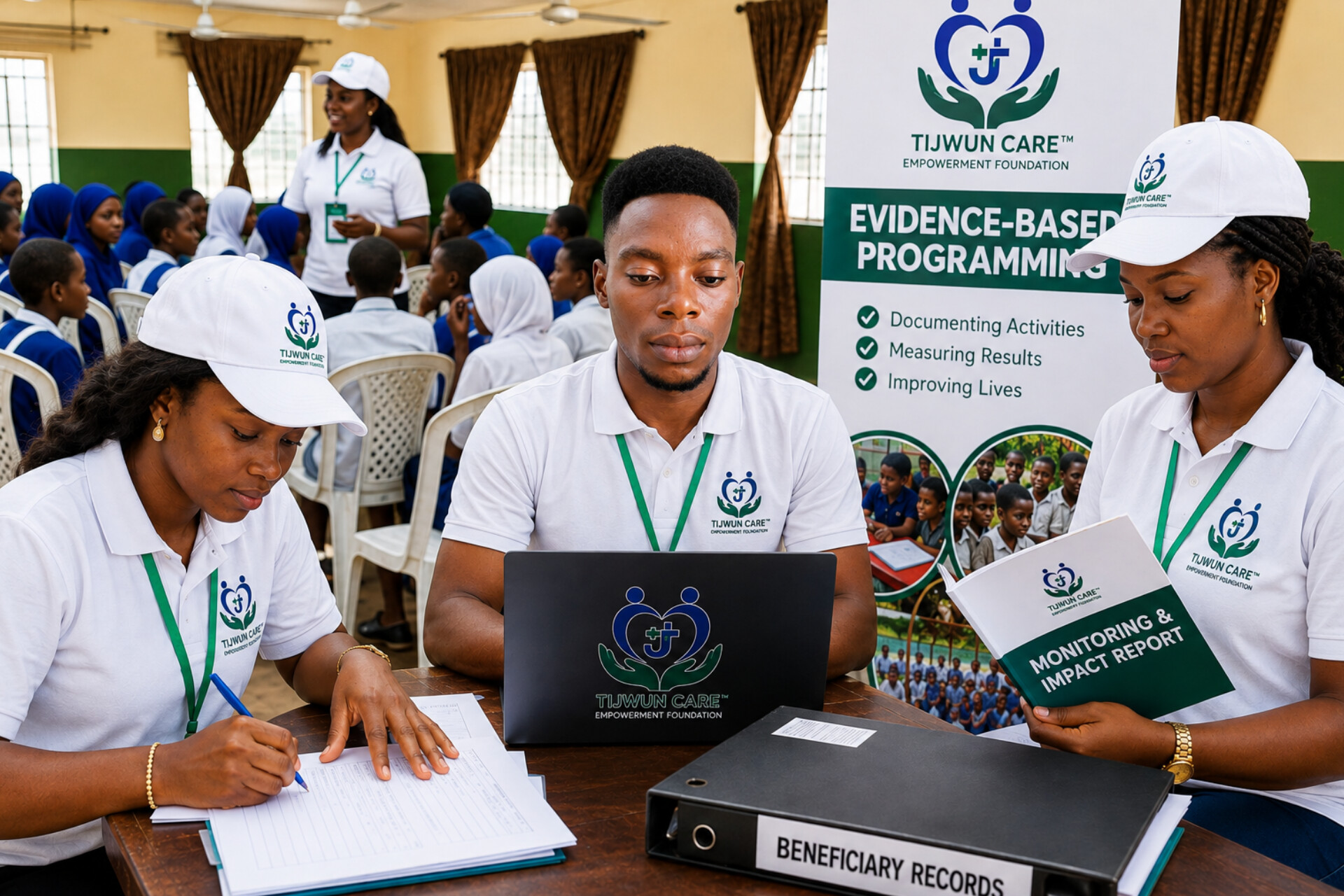
    The Tijwun Care and Empowerment Foundation (TIJCEF) is strengthening its approach to community development by placing programme documentation, beneficiary records and measurable results at the centre of how it tracks and communicates its interventions across communities.

    The approach forms part of TIJCEF’s Evidence pillar, one of the four pillars guiding the Foundation’s work alongside Dignity, Agency and Resilience.

    Rather than relying solely on statements about people being “empowered” or “impacted,” TIJCEF’s evidence approach focuses on documenting what interventions were implemented, where they took place, who participated, how many direct beneficiaries were reached and what programme records are available to support reported results.

    The importance of this approach can already be seen across TIJCEF’s programme portfolio.

    At Adroit International Academy in Yola, TIJCEF and Lead the Girl Foundation implemented a girls’ empowerment intervention reaching 200 girls.

    At Government Girls College Yola, more than 400 girls participated in a STEM-focused outreach.

    A youth empowerment seminar at Zion Centre in Girei reached 50 young people, while a women’s leadership and empowerment intervention in Taraba State reached 45 women.

    These programme-level figures provide TIJCEF with something more valuable than general claims about community impact: identifiable records connecting beneficiaries to specific interventions.

    From Activities to Verifiable Programme Records

    Grassroots organisations frequently work in environments where immediate community needs take priority over sophisticated data systems.

    A programme may be successfully conducted and photographed, but important information can be lost if beneficiary numbers, locations, dates, activities and outcomes are not properly recorded.

    TIJCEF’s Evidence pillar seeks to address this challenge by treating documentation as part of programme implementation rather than an activity that begins only when an annual report or funding proposal is required.

    This means evidence can begin with relatively simple records.

    How many people attended?

    Where did the programme take place?

    Who were the implementing partners?

    What group was targeted?

    What activities were delivered?

    What materials were provided?

    What photographs, attendance records or participant feedback exist?

    These questions help turn an activity into a documented intervention.

    Programme Figures Show Different Levels of Reach

    TIJCEF’s existing programme records illustrate why intervention-level documentation matters.

    The Foundation should not simply combine every number into a large headline figure without retaining information about where those beneficiaries came from.

    For example, the 200 girls reached at Adroit International Academy can be linked to a specific school-based girls’ empowerment programme jointly implemented with Lead the Girl Foundation.

    The 400-plus girls reached at Government Girls College Yola belong to a different intervention focused on STEM exposure.

    The 50 young people reached at Zion Centre, Girei, represent participants in a youth empowerment seminar.

    The 45 women reached through the Taraba leadership and empowerment programme represent another distinct beneficiary group.

    Separating these records allows TIJCEF to understand not only how many people it reaches but who it is reaching and through what type of intervention.

    That is a more useful measure for programme management.

    Evidence Prevents Double Counting

    Maintaining programme-level records also helps prevent a common problem in development reporting: double counting.

    A person may participate in more than one programme.

    For example, an individual who attends a leadership programme could later volunteer during another TIJCEF intervention.

    If every attendance is automatically counted as a unique beneficiary, the organisation’s cumulative reach could become inflated.

    An evidence-based system should therefore distinguish between programme participations and unique beneficiaries wherever records make that possible.

    The distinction becomes increasingly important as TIJCEF expands.

    Programme participation tells the Foundation how much activity it has delivered.

    Unique-beneficiary data provide a better indication of how many individual people have actually been reached.

    Both measurements can be useful, but they answer different questions.

    Evidence Also Means Acknowledging What Is Not Known

    TIJCEF’s approach to evidence is equally important when programme information is incomplete.

    The Foundation’s 2023 outreach to an orphanage in Katsina, for instance, can be documented through the visit by its Executive Director and the donation of gifts to children.

    However, where a verified beneficiary figure is not available, an estimated number should not be introduced simply to make the programme appear larger.

    Similarly, TIJCEF’s January 2026 two-day leadership training can be reported through its duration, programme records and participation of the President of Public Speakers Network of Africa Foundation alongside other resource persons.

    Where the exact attendance figure has not been verified, it is more credible to leave that figure unstated than to estimate it.

    This principle is central to evidence-based reporting:

    What is not measured should not be presented as measured.

    That standard protects both beneficiaries and the organisation.

    Photographs Form Part of the Evidence Base

    Programme photography also plays an important role in TIJCEF’s documentation.

    Images from training sessions, school programmes and community activities provide visual records showing how interventions were implemented.

    They can document participation, programme settings, organisational branding and engagement between volunteers, resource persons and beneficiaries.

    But photographs have limitations.

    A photograph showing a crowded training hall cannot independently establish that 100 people attended.

    A photograph of smiling participants cannot prove that their income increased.

    A picture of students during a STEM outreach cannot establish that they subsequently pursued STEM careers.

    Photography therefore supports evidence but does not replace beneficiary records or outcome measurement.

    This distinction enables TIJCEF to use visual documentation responsibly.

    Beneficiary Numbers Are Outputs, Not Automatically Impact

    One of the most important elements of the Evidence pillar is distinguishing between outputs and outcomes.

    Reaching 400 girls is an output.

    Showing that those girls increased their STEM knowledge would be an outcome.

    Training 50 young people is an output.

    Showing that participants subsequently applied specific skills would represent a further result.

    Reaching 45 women through leadership programming is an output.

    Demonstrating increased participation in leadership or livelihood activities would require additional evidence.

    This distinction prevents programme reach from automatically being described as transformation.

    TIJCEF can celebrate beneficiary numbers while remaining accurate about what those figures actually demonstrate.

    Evidence Supports Sustainable Development

    TIJCEF’s approach also connects with the wider international emphasis on data in sustainable development.

    The United Nations’ Sustainable Development Goal framework relies heavily on indicators because progress cannot be assessed effectively without reliable information.

    SDG 17, for example, includes targets related to increasing the availability of high-quality, timely and reliable data for sustainable development. United Nations Sustainable Development Goal 17⁠�

    For a grassroots organisation, this does not require building a national statistical system.

    It begins with ensuring that programme information is recorded consistently.

    A reliable attendance sheet is evidence.

    A properly completed beneficiary questionnaire is evidence.

    A dated programme photograph is evidence.

    A partner confirmation is evidence.

    A pre- and post-programme assessment can provide evidence of change.

    A follow-up interview can provide evidence about what happened after an intervention.

    When combined systematically, these records create an increasingly strong picture of organisational performance.

    Evidence Strengthens Accountability to Partners

    Good programme data are also important for partnerships and fundraising.

    Potential donors and institutional partners increasingly expect organisations to demonstrate what they have previously implemented.

    An organisation able to provide programme dates, locations, beneficiary numbers, photographs, partners and measurable results is better positioned to demonstrate institutional capacity than one relying exclusively on broad statements.

    For TIJCEF, this means its programme history can become part of its organisational evidence base.

    The Adroit intervention demonstrates collaboration with another foundation.

    The Government Girls College programme demonstrates large-scale school engagement.

    The Girei seminar demonstrates youth-focused programming.

    The Taraba intervention provides evidence of women-focused engagement.

    The volunteer training demonstrates investment in internal capacity.

    And the Katsina outreach documents humanitarian engagement with vulnerable children.

    Together, these interventions begin to establish a traceable record of what the Foundation has done.

    Evidence Must Protect Beneficiaries

    Collecting information also creates responsibilities.

    TIJCEF’s programmes involve groups including children and young people, meaning data collection must respect privacy, dignity and safeguarding principles.

    Not every piece of information collected should be published.

    Beneficiary names, contact information and sensitive personal details should be handled carefully.

    Public impact reporting can rely primarily on aggregated information.

    Instead of identifying individual children, TIJCEF can report that 200 girls participated in a programme.

    Instead of publishing private questionnaire responses, results can be presented as aggregated percentages where appropriate.

    This allows evidence to strengthen accountability without compromising beneficiary dignity.

    Building a Culture of Evidence

    TIJCEF’s Evidence pillar ultimately goes beyond numbers.

    It represents an organisational culture in which claims are expected to have supporting records.

    That means being willing to report both achievements and limitations.

    It means distinguishing between direct beneficiaries and estimated reach.

    It means recognising partners rather than claiming collaborative programmes as exclusively TIJCEF interventions.

    It means acknowledging when a beneficiary number is unavailable.

    And it means avoiding impressive-looking percentages that have no underlying dataset.

    For a growing grassroots organisation, these practices can become important institutional strengths.

    TIJCEF’s programmes already provide the foundation.

    There are documented interventions involving 200 girls at Adroit International Academy, more than 400 girls at Government Girls College Yola, 50 young people in Girei and 45 women in Taraba, alongside other activities for which different forms of programme evidence exist.

    The task of the Evidence pillar is to ensure that those activities become more than memories or photographs.

    They become records.

    Those records become data.

    And where appropriate measurement exists, that data can eventually demonstrate outcomes.

    For TIJCEF, this is what evidence-based community development means: not merely saying that impact happened, but building the records capable of showing what was done, who was reached and what changed.

  • TIJCEF Strengthens Community Resilience Through Volunteer Training in Yola

    TIJCEF Strengthens Community Resilience Through Volunteer Training in Yola

    TIJCEF Strengthens Community Resilience Through Volunteer Training in Yola


    The Tijwun Care and Empowerment Foundation (TIJCEF) strengthened its community-development capacity in April 2026 through a volunteer training programme in Yola, Adamawa State, bringing volunteers together to improve their preparedness for community service and the implementation of the Foundation’s grassroots interventions.


    The training formed part of TIJCEF’s efforts to build a stronger network of people capable of supporting programmes involving women, girls, young people and vulnerable communities.


    Rather than focusing exclusively on beneficiaries, the programme turned attention to an important group behind successful community interventions: volunteers.


    For TIJCEF, volunteers provide a connection between organisational plans and the communities in which programmes are implemented. Their ability to communicate, work with beneficiaries, understand programme objectives and represent the organisation responsibly can influence the quality of interventions delivered in the field.


    The Yola training therefore falls under TIJCEF’s Resilience pillar, reflecting the Foundation’s recognition that sustainable community action requires organisations themselves to develop people, structures and systems capable of continuing their work in changing circumstances.


    Training Volunteers for Community Service


    The April 2026 programme was organised as a capacity-building intervention for TIJCEF volunteers.


    The training provided an opportunity to bring individuals involved in the Foundation’s activities together within a structured learning environment.


    For a grassroots organisation, this type of internal capacity development is important.


    Community programmes may be carefully designed at organisational level, but implementation frequently depends on people working directly with beneficiaries.


    Volunteers can support registration.


    They can assist with programme coordination.


    They can communicate with participants.


    They can help distribute materials.


    They can support documentation.


    They may also represent the Foundation during interactions with schools, community leaders and other stakeholders.


    Training therefore provides an opportunity to strengthen how these responsibilities are carried out.


    TIJCEF’s decision to invest in volunteer development in Yola demonstrates that the Foundation’s community work is not limited to organising public-facing programmes.


    It also includes building the human capacity required to deliver those programmes.


    Volunteers Play an Important Role in Development


    Volunteerism contributes significantly to community development around the world.


    The United Nations Volunteers programme describes volunteerism as an important mechanism through which people participate in development and contribute to their communities.


    The 2022 State of the World’s Volunteerism Report estimated that approximately 862 million people aged 15 and above volunteer globally each month, demonstrating the scale at which voluntary action contributes to societies. “United Nations Volunteers – State of the World’s Volunteerism Report” (https://reference-url-citation.invalid/0)


    The global figure is not presented as a measure of TIJCEF’s volunteer network.


    Instead, it demonstrates the broader importance of voluntary service as a component of development.


    At community level, volunteers can help organisations extend their activities beyond what paid staff alone may be able to accomplish.


    This can be particularly important for grassroots organisations operating with limited financial and human resources.


    Building Resilience Within the Organisation


    TIJCEF’s Resilience pillar is often expressed through programmes designed to strengthen beneficiaries’ capacity to respond to social and economic challenges.


    The volunteer training represents another side of resilience: organisational resilience.


    An organisation becomes more resilient when knowledge and responsibility are distributed among multiple people rather than concentrated in a small leadership team.


    If only one or two individuals understand how programmes are organised, activities can become difficult to sustain when those individuals are unavailable.


    Training volunteers expands the number of people who understand the organisation’s work and can contribute to programme implementation.


    This can strengthen continuity.


    It can also improve the Foundation’s ability to respond when new opportunities or community needs arise.


    The April training therefore served not only the individuals participating but also TIJCEF’s wider programme structure.


    Supporting TIJCEF’s Growing Programme Activities


    The volunteer training came during a period of expanding activity for the Foundation.


    TIJCEF’s interventions have involved different beneficiary groups and programme settings, from girls’ empowerment in schools to leadership programmes, women’s empowerment and youth-focused activities.


    Each type of programme creates different logistical and human-resource demands.


    A school outreach involving hundreds of girls requires coordination.


    A leadership training programme requires participant management and documentation.


    A community intervention may require mobilisation and communication with local stakeholders.


    Humanitarian activities can require careful handling and distribution of materials.


    Volunteers can support these processes when they understand their responsibilities.


    Training therefore becomes part of programme quality rather than an activity separate from programme delivery.


    Community Engagement Requires Responsibility


    Working with communities also creates responsibilities.


    Volunteers may encounter children, women or other people in vulnerable situations.


    How volunteers communicate with participants and handle personal information can affect the dignity and safety of beneficiaries.


    This is especially important when programmes involve children.


    TIJCEF’s activities involving girls and other young people require attention to appropriate safeguarding and responsible documentation.


    Photographs, names and personal information should be handled carefully.


    Volunteers representing the Foundation also need to understand that their conduct can influence public trust in the organisation.


    A poorly managed interaction can damage a relationship with a school or community.


    Professional and respectful engagement can strengthen that relationship.


    Capacity development therefore contributes to more than operational efficiency. It can help establish common expectations regarding how an organisation interacts with the people it serves.


    Volunteer Development Supports the SDGs


    Volunteerism also has a recognised relationship with the Sustainable Development Goals.


    The United Nations has highlighted the role volunteers can play in implementing development initiatives and strengthening people’s participation in sustainable development.


    For TIJCEF, this connection is practical.


    Its community programmes already intersect with development areas such as gender equality, education, health, youth development and community wellbeing.


    Volunteers can contribute to these interventions through mobilisation, programme support, communication and documentation.


    Building their capacity can therefore strengthen the Foundation’s ability to contribute at grassroots level to wider development objectives.


    The scale of TIJCEF’s contribution remains local, but local action forms part of the broader development process.


    Training as an Investment in People


    Volunteer training also provides value to the volunteers themselves.


    People who participate in community service can gain exposure to programme organisation, teamwork, communication and social-development activities.


    For young volunteers in particular, these experiences can complement formal education.


    However, TIJCEF should distinguish between providing exposure and claiming outcomes that have not been measured.


    Participation in a volunteer training programme does not automatically prove that every participant acquired employment or developed a specific level of professional competence.


    The documented result is that TIJCEF conducted the training in Yola in April 2026 as part of its volunteer-capacity development.


    Any specific claims about knowledge improvement or subsequent professional outcomes would require supporting assessment or follow-up evidence.


    Strengthening the People Behind the Programmes


    The Yola training is significant because impact organisations are often judged almost entirely by the number of external beneficiaries they reach.


    Those figures are important, but they do not tell the entire story.


    Behind every well-organised intervention are people responsible for planning, mobilisation, logistics, communication and documentation.


    For TIJCEF, volunteers form part of that structure.


    Investing in them is therefore an investment in the Foundation’s capacity to serve communities effectively.


    The programme also demonstrates why resilience must be built internally as well as externally.


    An organisation that seeks to strengthen communities must itself develop systems and people capable of sustaining its work.


    Building a Stronger Foundation for Community Impact


    TIJCEF’s April 2026 volunteer training in Yola represents a documented step towards strengthening that internal capacity.


    The programme brought volunteers together.


    It focused on preparing people involved in the Foundation’s community work.


    And it strengthened the human network supporting TIJCEF’s expanding interventions.


    Unlike the Girei youth empowerment seminar, which directly focused on young beneficiaries, the Yola volunteer programme concentrated on people helping the Foundation deliver its mission.


    This makes the two Resilience interventions fundamentally different.


    One seeks to strengthen the resilience of young people facing social and economic challenges.


    The other strengthens the organisational and volunteer capacity required to continue serving communities.


    Together, they demonstrate the two sides of resilience reflected in TIJCEF’s work: building stronger people in communities and building a stronger organisation capable of standing with those communities.


    As TIJCEF continues expanding its programmes, trained and committed volunteers will remain important to translating plans into action.


    The April 2026 Yola programme therefore represents more than an internal meeting.


    It forms part of the infrastructure behind TIJCEF’s community impact the people who help move the Foundation’s mission from organisational objectives to practical service on the ground.

  • TIJCEF Builds Youth Resilience Through Empowerment Seminar in Girei

    TIJCEF Builds Youth Resilience Through Empowerment Seminar in Girei

    TIJCEF Builds Youth Resilience Through Empowerment Seminar in Girei


    The Tijwun Care and Empowerment Foundation (TIJCEF) has strengthened its youth-development interventions in Adamawa State through an empowerment seminar held at Zion Centre in Girei, bringing together 50 young people for an engagement focused on personal development, empowerment and building capacity to navigate social and economic challenges.


    The programme directly reached 50 participants, providing TIJCEF with a documented beneficiary figure for the intervention and adding to the Foundation’s growing portfolio of youth-focused activities.


    Unlike TIJCEF’s girls’ empowerment programme at Adroit International Academy or its women-focused intervention in Taraba State, the Girei programme was designed specifically around young people and the importance of strengthening their capacity to respond to challenges, recognise opportunities and contribute positively to their communities.


    The intervention falls under TIJCEF’s Resilience pillar, which focuses on helping individuals and communities develop the capacity to withstand challenges, adapt to changing circumstances and pursue opportunities despite social and economic pressures.


    The Girei seminar was implemented against a wider national environment in which Nigerian youths continue to confront employment difficulties, skills gaps, economic pressures and uncertainty about pathways from education into sustainable livelihoods.


    50 Young People Reached in Girei


    According to TIJCEF’s programme records, 50 young people participated in the seminar at Zion Centre, Girei.


    The figure represents direct programme participation and is not an estimate based on indirect reach.


    For TIJCEF, working with a defined group of 50 participants provided an opportunity to bring young people together within a structured setting for an empowerment-focused engagement.


    The programme reflected the Foundation’s belief that resilience cannot be built through material support alone.


    Young people also require access to knowledge, exposure, networks and opportunities that can strengthen their ability to respond to changing circumstances.


    This is particularly relevant in a country where the transition between education and employment can be difficult for many young people.


    Youth Development Remains a Major Nigerian Challenge


    Nigeria’s demographic structure makes youth development a national priority.


    With a large and youthful population, the country’s ability to provide young people with education, skills and pathways into productive economic activity has major implications for future development.


    Nigeria’s National Employment Policy 2025 recognises some of these challenges.


    The International Labour Organization reported that the policy seeks to respond to unemployment and underemployment while strengthening employment creation, skills development, youth participation and inclusive economic opportunities.


    The policy also places emphasis on preparing Nigerians for changes in the labour market and improving the relationship between skills development and employment opportunities. “International Labour Organization – Nigeria National Employment Policy 2025” (https://reference-url-citation.invalid/0)


    TIJCEF’s Girei intervention operates at a much smaller scale than national employment programmes.


    However, grassroots programmes have a different role.


    They can engage young people directly within their communities and create opportunities for interaction that may be difficult to achieve through large national programmes alone.


    The 50 participants reached in Girei represent this community-level approach.


    Resilience Means Preparing for Challenges


    TIJCEF’s classification of the programme under its Resilience pillar reflects the nature of the intervention.


    Resilience is sometimes associated primarily with natural disasters or humanitarian emergencies.


    For young people, however, resilience can also involve the ability to respond constructively to unemployment, economic difficulties, educational setbacks and other challenges encountered during the transition into adulthood.


    This does not mean young people should simply be expected to endure difficult economic conditions.


    Structural challenges require government policies, investment, employment creation and functioning public institutions.


    At the individual level, however, knowledge, adaptability and access to opportunities can influence how people respond when difficulties arise.


    Youth empowerment programmes can contribute to this capacity.


    The Girei seminar therefore provided TIJCEF with a platform to engage 50 young people around personal development and empowerment within their local environment.


    Economic Conditions Give the Programme Wider Relevance


    Nigeria’s poverty situation provides additional context for grassroots resilience programmes.


    The National Bureau of Statistics’ 2022 Multidimensional Poverty Index estimated that approximately 133 million Nigerians, or 63 per cent of the population, were multidimensionally poor.


    The assessment went beyond income alone and examined overlapping deprivation affecting areas including education, health, living standards, work and shocks.


    The survey also found a substantial geographical divide, with multidimensional poverty affecting a considerably greater proportion of people in rural areas than in urban areas. “National Bureau of Statistics – Nigeria Multidimensional Poverty Index” (https://reference-url-citation.invalid/1)


    These national figures are not presented as statistics describing the 50 participants at the Girei seminar.


    TIJCEF does not have evidence showing that all participants were multidimensionally poor, and such an assumption would be inappropriate.


    The figures instead provide national context demonstrating the difficult economic environment in which many Nigerian young people are attempting to establish livelihoods.


    Empowerment Beyond Financial Assistance


    The Girei programme also reflects an important aspect of TIJCEF’s approach to empowerment.


    Supporting young people does not always require direct cash or material assistance.


    Information can be valuable.


    Exposure can be valuable.


    Skills can be valuable.


    Networks can be valuable.


    Encouragement combined with practical knowledge can also help young people recognise opportunities they might otherwise overlook.


    This does not mean motivational programmes should be presented as substitutes for employment.


    A seminar cannot create an economy.


    It cannot guarantee that a participant will obtain a job or establish a successful business.


    TIJCEF therefore does not report the 50 participants as having become employed or financially independent merely because they attended the programme.


    The verified programme result is that 50 young people participated in the empowerment seminar.


    Claims concerning subsequent employment, entrepreneurship or other livelihood outcomes would require separate evidence.


    Girei Intervention Adds to TIJCEF’s Youth Work


    The programme also strengthens TIJCEF’s presence in Girei and adds another location to the Foundation’s programme footprint.


    TIJCEF’s activities have reached different populations in different settings, including girls in schools, women through leadership programmes and children through humanitarian outreach.


    The Girei intervention focused specifically on young people.


    This distinction matters because the challenges and development needs of different beneficiary groups are not identical.


    A schoolgirl may require educational exposure and mentoring.


    A woman participating in a leadership programme may have different priorities around livelihoods, financial inclusion or community participation.


    Young adults attempting to transition into employment or entrepreneurship may require another combination of information, skills and networks.


    Programme design becomes stronger when these differences are recognised.


    Evidence Provides a Clear Programme Record


    The Girei seminar also demonstrates the importance of maintaining verified beneficiary figures.


    TIJCEF records 50 direct participants for the intervention.


    The Foundation does not multiply this number by estimating how many family members or friends may subsequently have heard information from those participants.


    Unless secondary beneficiaries are directly documented, they should not be included in the official programme reach.


    This approach gives TIJCEF a more defensible evidence base.


    It also means that when the Foundation reports its cumulative beneficiary numbers, individual programme figures can be traced back to specific activities and locations.


    For the Girei programme, the evidence chain is straightforward:


    TIJCEF organised the intervention.


    It was held at Zion Centre in Girei.


    The programme focused on youth empowerment.


    And 50 young people participated.


    These facts provide a stronger foundation for reporting than exaggerated claims about transformation that cannot be independently demonstrated.


    Building Resilience at Community Level


    Nigeria’s youth-development challenges require action at several levels.


    Federal and state governments have responsibility for economic policy, education, infrastructure and employment creation.


    Businesses play a role in investment and job creation.


    Educational institutions develop knowledge and technical skills.


    Civil society organisations can complement these systems through community-based interventions, mentoring, capacity development and connections to opportunities.


    TIJCEF’s Girei seminar represents one such contribution.


    Its scale was 50 participants rather than thousands.


    Its geographical focus was Girei rather than the entire country.


    And its intervention was an empowerment seminar rather than a national employment programme.


    Reporting those boundaries clearly is important.


    Grassroots impact does not have to be exaggerated to be meaningful.


    Fifty Participants, One Documented Intervention


    The Girei youth empowerment seminar represents a practical expression of TIJCEF’s Resilience pillar.


    A total of 50 young people were directly reached through the programme at Zion Centre.


    The intervention created a platform for engagement around empowerment and personal development at a time when young Nigerians continue to navigate significant economic and employment challenges.


    The wider national evidence demonstrates why youth resilience matters, but TIJCEF’s contribution remains deliberately specific.


    The Foundation does not claim that one seminar solved youth unemployment in Girei.


    It does not claim that all 50 participants subsequently established businesses or secured jobs without evidence showing that this happened.


    What TIJCEF can demonstrate is that it brought 50 young people together for an organised empowerment intervention within their community.


    That documented action is the starting point for impact.


    Through programmes such as the Girei seminar, TIJCEF’s Resilience pillar is being translated from an organisational value into community-level engagement helping create spaces where young people can gain exposure, strengthen their capacity and become better prepared to navigate the challenges and opportunities ahead.

  • TIJCEF Holds Two-Day Leadership Training to Strengthen Leadership Capacity

    TIJCEF Holds Two-Day Leadership Training to Strengthen Leadership Capacity

    TIJCEF Holds Two-Day Leadership Training to Strengthen Leadership Capacity


    The Tijwun Care and Empowerment Foundation (TIJCEF) organised a two-day leadership training programme in January 2026, bringing participants together for intensive capacity development led by experienced resource persons, including the President of Public Speakers Network of Africa Foundation.


    The programme formed part of TIJCEF’s efforts to strengthen leadership, communication and personal-development capacity and was implemented under the Foundation’s Agency pillar, which focuses on enabling individuals to develop the knowledge, confidence and capacity required to make informed decisions and contribute meaningfully to their communities.


    The President of Public Speakers Network of Africa Foundation served as one of the programme’s resource persons, alongside other key individuals who contributed to the two-day training.


    Unlike a one-off motivational engagement, the programme was conducted over two days, providing participants with an extended period for learning, interaction and engagement with the resource persons.


    The intervention came as Nigeria continues to confront challenges surrounding youth skills, employment and meaningful participation in economic and community development, making investments in practical leadership and transferable skills increasingly important.


    Two-Day Programme Focuses on Capacity Development


    The January 2026 programme placed human-capacity development at the centre of TIJCEF’s intervention.


    For the Foundation, leadership development is not restricted to people occupying political offices or senior organisational positions. Leadership can be demonstrated within schools, workplaces, businesses, civil society organisations, religious institutions and communities.


    The programme therefore provided a platform through which participants could engage with resource persons and strengthen skills relevant to their personal and professional development.


    Its two-day duration was also a notable element of the intervention.


    Rather than bringing participants together for a brief session, TIJCEF dedicated two days to the programme, allowing greater opportunity for engagement between participants and facilitators.


    The Foundation’s decision to involve multiple resource persons also broadened the programme beyond a single perspective.


    Among those contributing was the President of Public Speakers Network of Africa Foundation, bringing public-speaking and communication experience into a programme centred on leadership development.


    Public Speaking Meets Leadership Development


    The involvement of a public-speaking professional was relevant because communication remains an important component of effective leadership.


    Leaders are frequently required to explain ideas, engage groups, communicate decisions and mobilise people around objectives.


    For young people and emerging leaders, the ability to organise thoughts and communicate confidently can also affect participation in professional, educational and community environments.


    Public speaking is therefore not limited to delivering speeches before large audiences.


    It can include presenting an idea during a meeting, defending a proposal, communicating with colleagues, addressing community members or explaining a project to potential partners.


    By including expertise in this area within the two-day programme, TIJCEF connected leadership development with practical communication capacity.


    Other key resource persons also participated, giving the training a multi-resource-person structure rather than making it dependent on one facilitator.


    Programme Reflects TIJCEF’s Agency Pillar


    The leadership training falls under TIJCEF’s Agency pillar, one of the four pillars guiding the Foundation’s programmes.


    Within this pillar, the emphasis is on people’s ability to act rather than simply receive assistance.


    Leadership training fits this approach because its primary output is not the distribution of physical materials. Instead, it creates access to knowledge, experience and interaction that participants can potentially apply in their personal and professional lives.


    This distinguishes the programme from TIJCEF’s humanitarian activities.


    For example, an intervention involving donated materials responds primarily to an immediate need. Leadership training seeks to strengthen individual capacity.


    Both approaches can serve important purposes, but their results should be reported differently.


    For the January programme, the documented facts include the two-day duration, TIJCEF’s role as organiser and the involvement of the President of Public Speakers Network of Africa Foundation alongside other resource persons.


    A beneficiary figure has not been inserted into this report because a verified attendance number has not been established in the information currently available for publication.


    This prevents an estimated audience from being presented as a confirmed programme statistic.


    Nigeria’s Youth Skills Challenge Provides Wider Context


    TIJCEF’s intervention took place within a wider national push to improve skills and employment opportunities.


    In 2025, Nigeria launched a new National Employment Policy, with the International Labour Organization reporting that the policy places emphasis on employment creation, skills development, youth participation, gender equality and reducing regional disparities.


    The ILO described the policy as part of efforts to respond to unemployment, underemployment and the changing nature of work in Nigeria. “International Labour Organization – Nigeria National Employment Policy 2025” (https://reference-url-citation.invalid/0)


    The national policy environment demonstrates why capacity-development interventions have relevance beyond the organisations implementing them.


    Leadership training alone cannot resolve unemployment.


    Public-speaking skills alone cannot create jobs.


    However, communication, leadership, teamwork and problem-solving are transferable capabilities that can complement academic and technical qualifications.


    Grassroots interventions can contribute to this process by making development opportunities accessible to participants at community level.


    TIJCEF Expands Capacity-Building Activities


    The January leadership programme also adds to TIJCEF’s growing portfolio of capacity-development activities.


    The Foundation’s interventions have covered different groups and development needs, including girls’ empowerment, women’s leadership, youth development and humanitarian support.


    The two-day training represents the leadership-development component of that broader programme structure.


    By bringing experienced resource persons into direct engagement with participants, TIJCEF sought to provide learning that could be applied beyond the training venue.


    The programme also demonstrated the value of drawing expertise from outside the Foundation itself.


    Civil society organisations do not need to possess every form of expertise internally.


    Partnership with professionals and specialist organisations can enable grassroots foundations to deliver programmes involving knowledge that may otherwise be unavailable to their beneficiaries.


    The involvement of the President of Public Speakers Network of Africa Foundation illustrates this approach.


    Evidence Remains Important in Reporting Training Outcomes


    While the programme can be documented through its duration, organisers, resource persons, photographs and other programme records, TIJCEF is careful about distinguishing those records from measurable behavioural outcomes.


    Participation in leadership training does not automatically prove that every participant subsequently became a leader or significantly improved their public-speaking ability.


    Such conclusions require additional evidence.


    For this reason, TIJCEF’s reporting of the January programme focuses on what was delivered rather than attaching unsupported impact percentages to the training.


    This approach is particularly important as the Foundation strengthens its commitment to evidence-based programming.


    Where attendance registers are available, verified beneficiary figures can be incorporated into programme records.


    Where pre- and post-training assessments exist, changes in participants’ knowledge can be reported.


    Where follow-up interviews are conducted, subsequent application of skills can also become part of the evidence base.


    Without those measurements, the Foundation can still report the intervention accurately without overstating what it achieved.


    Investing in Human Capacity


    The significance of the January 2026 leadership programme ultimately lies in TIJCEF’s decision to invest in people.


    Community development requires infrastructure, social services and material resources, but it also requires individuals capable of organising, communicating and taking responsibility.


    Leadership capacity contributes to that human component of development.


    A young person capable of communicating an idea effectively may be better positioned to advocate for a community project.


    An emerging entrepreneur who can present a business concept clearly may be better able to engage partners.


    A volunteer who develops organisational skills may contribute more effectively to community initiatives.


    These are examples of why leadership and communication skills remain relevant across different areas of development.


    Two Days Dedicated to Building Agency


    The January 2026 intervention therefore represents a documented component of TIJCEF’s Agency pillar.


    TIJCEF organised the training.


    The programme lasted two days.


    The President of Public Speakers Network of Africa Foundation served as a resource person.


    Other key resource persons also contributed.


    And participants were brought together for leadership and capacity development.


    Those facts provide the foundation of the programme’s impact record without requiring exaggerated claims.


    For TIJCEF, the intervention also reinforces an important principle: empowerment should not only provide people with temporary assistance. It should create opportunities for them to acquire knowledge and strengthen their ability to act.


    The two-day leadership training translated that principle into a practical programme.


    As TIJCEF continues expanding its work, the January intervention stands as evidence of the Foundation’s investment in developing people who can communicate, participate and contribute more effectively within their organisations and communities.


    That is the central purpose of the Agency pillar: helping people move from participation to greater capacity for action.

  • TIJCEF Extends Support to Children During 2023 Katsina Orphanage Outreach

    TIJCEF Extends Support to Children During 2023 Katsina Orphanage Outreach

    TIJCEF Extends Support to Children During 2023 Katsina Orphanage Outreach


    The Tijwun Care and Empowerment Foundation (TIJCEF) extended its humanitarian activities to vulnerable children in Katsina State in 2023, when the Foundation, through its Executive Director, visited an orphanage in Katsina and donated gifts to children at the facility.


    The outreach formed part of TIJCEF’s early humanitarian engagements and reflected the organisation’s commitment to supporting vulnerable groups while promoting dignity, care and social inclusion.


    During the visit, the Foundation’s Executive Director interacted with children at the orphanage and presented gifts as TIJCEF sought to demonstrate solidarity with children living outside conventional family environments.


    The intervention falls under TIJCEF’s Dignity pillar, which focuses on recognising the inherent worth of individuals, particularly children, women and other people experiencing vulnerable circumstances.


    Unlike the Foundation’s school empowerment programmes, the Katsina outreach was primarily a humanitarian and social-support intervention. Its immediate documented outcome was the visit itself and the provision of gifts to children at the orphanage.


    TIJCEF has not attached an unverified beneficiary figure or monetary value to the intervention, maintaining a distinction between documented programme information and figures that cannot presently be confirmed from available records.


    2023 Outreach Takes TIJCEF’s Work to Katsina


    The outreach represented TIJCEF’s engagement beyond a conventional training or school environment.


    By visiting an orphanage directly, the Foundation was able to take its humanitarian support to children living in an institutional-care setting.


    The gifts donated during the visit provided the material component of the intervention, while the physical presence of the Foundation’s leadership demonstrated an effort to engage directly with the children rather than limiting support to remote donations.


    The programme took place at a time when child poverty and vulnerability remained major development challenges across Nigeria.


    UNICEF’s 2023 Annual Report for Nigeria reported that more than half of Nigerian children aged 0–17 were living in multidimensional poverty, with children in rural and conflict-affected areas particularly affected.


    Earlier national child-poverty analysis produced by the Federal Government, National Bureau of Statistics and UNICEF estimated that approximately 54 per cent of Nigerian children were multidimensionally poor, meaning they experienced deprivation in at least three dimensions of child rights, including areas such as nutrition, health, education, water, sanitation, housing and access to information.


    The figures demonstrate the broader environment in which relatively small humanitarian interventions such as TIJCEF’s Katsina outreach operate.


    Supporting Children Beyond Material Donations


    Although gifts formed the material component of the 2023 outreach, the intervention also placed attention on children who can easily remain outside the focus of mainstream community activities.


    Children living in orphanages and other forms of residential care may require support extending beyond material needs.


    Nigeria’s National Guidelines for the Alternative Care of Children, developed by the Federal Ministry of Women Affairs with support from UNICEF and SOS Children’s Villages, recognise that children without appropriate parental care can face risks including neglect, abuse and exploitation. The framework seeks to standardise services and strengthen protection for children requiring alternative care.


    This wider child-protection environment gives additional context to TIJCEF’s decision to engage children at an orphanage.


    The Foundation does not claim that the donation addressed every need confronting the children or that one visit permanently transformed their circumstances.


    Rather, the outreach represents a documented act of humanitarian engagement with a vulnerable group.


    That distinction is important to TIJCEF’s approach to impact reporting.


    Child Vulnerability Remains a National Challenge


    Nigeria’s child population is enormous.


    The Federal Government and UNICEF’s updated situation analysis estimates that the country has nearly 105 million children and adolescents aged 0–17, representing approximately half of Nigeria’s population.


    This makes child welfare a significant national development issue.


    The challenges extend beyond poverty.


    UNICEF reports that violence against children occurs in homes, schools and communities and states that six out of every 10 Nigerian children experience some form of violence. The organisation also reports that only a small proportion of children who experience and report violence receive support.


    These statistics do not describe the individual children involved in TIJCEF’s Katsina outreach, and they should not be interpreted as evidence that children at the visited orphanage experienced those specific circumstances.


    Instead, they provide national context demonstrating why child protection, social inclusion and support for vulnerable children remain important areas of development work in Nigeria.


    Dignity at the Centre of TIJCEF’s Engagement


    TIJCEF classifies the Katsina outreach under its Dignity pillar because the intervention was centred on recognising and supporting children experiencing vulnerable circumstances.


    The Foundation’s dignity approach requires more than viewing beneficiaries as recipients of donations.


    It recognises children as individuals whose circumstances should not determine their worth or limit society’s responsibility towards them.


    For TIJCEF, this means humanitarian engagement should respect the people receiving support.


    The children reached through the Katsina outreach should therefore not be reduced to images of vulnerability.


    They are children with individual personalities, ambitions and potential.


    This principle is particularly important when reporting programmes involving minors.


    Responsible development communication requires organisations to balance the need to document activities with the responsibility to protect children’s privacy and dignity.


    Programme photographs can provide evidence that an outreach occurred, but photographs involving children should be handled carefully and in accordance with appropriate consent and safeguarding practices.


    Outreach Adds to TIJCEF’s Humanitarian Record


    The 2023 Katsina intervention is also significant in documenting the development of TIJCEF’s programme activities over time.


    While some of the Foundation’s later interventions have focused on leadership, girls’ empowerment, STEM exposure and capacity development, the Katsina programme demonstrates a humanitarian dimension to the organisation’s work.


    It provides evidence that TIJCEF’s activities have included direct engagement with vulnerable children alongside its educational and empowerment programmes.


    The intervention also illustrates the difference between different types of impact.


    In a training programme, TIJCEF may measure knowledge gained or skills acquired.


    In an empowerment programme, the Foundation may examine confidence, participation or subsequent action.


    For a humanitarian donation, the most immediate measures are different: the beneficiaries reached, the materials supplied and the immediate purpose for which those materials were provided.


    In the case of the Katsina outreach, TIJCEF is reporting only what is currently verifiable: the outreach took place in Katsina in 2023 through the Foundation’s Executive Director, and gifts were donated to children at the orphanage.


    The Foundation is not assigning an unsupported number of beneficiaries, an estimated financial value to the donations or an unmeasured percentage improvement in child wellbeing.


    Nigeria Moves to Strengthen Alternative Care


    Nigeria has since taken further steps to strengthen the framework governing children who require alternative care.


    The National Guidelines for the Alternative Care of Children provide a regulatory framework intended to standardise services for vulnerable children without appropriate care, including children deprived of a family environment.


    Such national measures underline the importance of ensuring that support for children in residential settings goes beyond occasional charitable assistance.


    Government institutions retain the primary responsibility for establishing and enforcing effective child-protection systems.


    Civil society organisations, communities, families, development partners and responsible private organisations can complement those systems through carefully designed interventions.


    For TIJCEF, this creates opportunities for future partnerships in areas such as education, mentorship, skills exposure and other forms of support where needs are clearly identified by responsible institutions.


    A Documented Act of Care


    TIJCEF’s 2023 Katsina orphanage outreach may have been relatively modest in scale compared with large national development programmes, but its significance lies in what can be clearly documented.


    The Foundation went to the orphanage.


    Its Executive Director participated directly in the engagement.


    Children at the facility were reached.


    And gifts were donated.


    Those facts provide the basis of the programme report.


    Rather than exaggerating the outreach by describing a single donation as a complete solution to child vulnerability, TIJCEF places the intervention within a broader commitment to dignity and humanitarian service.


    The national evidence shows why such concern remains relevant. Millions of Nigerian children experience overlapping forms of deprivation, while children without appropriate parental care require particularly strong systems of protection and support.


    For TIJCEF, the Katsina outreach represents one contribution within that much larger challenge.


    It also captures the central principle behind the Foundation’s Dignity pillar: vulnerable circumstances should never make a child invisible.


    Through the 2023 outreach, TIJCEF translated that principle into direct engagement by visiting children, spending time within their environment and providing gifts as an expression of care and social solidarity.

  • TIJCEF Reaches Over 400 Girls Through STEM Outreach at Government Girls College Yola

    TIJCEF Reaches Over 400 Girls Through STEM Outreach at Government Girls College Yola

    TIJCEF Reaches Over 400 Girls Through STEM Outreach at Government Girls College Yola

    The Tijwun Care and Empowerment Foundation (TIJCEF) expanded its education and youth-development work in Adamawa State through a STEM-focused outreach at Government Girls College, Yola, where more than 400 girls were reached through an intervention designed to expose female students to opportunities in science, technology, engineering and mathematics.

    The school-based programme brought TIJCEF directly into one of Yola’s girls’ educational environments, creating an opportunity to engage hundreds of students around STEM education and the importance of preparing girls to participate in fields that are increasingly shaping education, employment, innovation and economic development.

    With over 400 girls reached, the Government Girls College intervention represents one of TIJCEF’s larger documented school outreaches.

    The programme falls under the Foundation’s Evidence pillar, reflecting TIJCEF’s commitment to using education, knowledge and measurable programme records to support interventions addressing identified development gaps.

    The beneficiary figure provides a clear measure of the programme’s direct reach: more than 400 female students participated in the outreach.

    Rather than presenting attendance as proof that every participant subsequently entered a STEM career, TIJCEF reports the programme for what the available evidence establishes—a large-scale school intervention that brought STEM awareness and exposure directly to girls in Yola.

    More Than 400 Girls Reached in One School

    The scale of the Government Girls College programme is significant within TIJCEF’s programme portfolio.

    More than 400 girls were directly reached through the intervention.

    This figure refers to students who participated in the programme and does not include estimated family members, friends or other people who may subsequently have heard about the outreach.

    Maintaining that distinction is important to TIJCEF’s evidence-based reporting.

    The programme placed the students themselves at the centre of the activity.

    Government Girls College provided a particularly relevant environment for the intervention because an all-girls school enables STEM messaging to reach a concentrated population of female students at a stage when educational interests and career ambitions are developing.

    For TIJCEF, the programme was therefore not simply about increasing the number of people attending an outreach.

    It was about reaching a specific population with a specific development message.

    Why STEM Exposure for Girls Matters

    Science and technology increasingly influence almost every major sector of modern society.

    Agriculture is becoming more data-driven.

    Healthcare increasingly uses digital technologies.

    Environmental management depends heavily on scientific information.

    Engineering remains central to infrastructure development.

    Geospatial technology supports agriculture, urban planning, disaster management and environmental monitoring.

    Artificial intelligence and digital technologies are also changing how businesses and public institutions operate.

    Girls therefore need opportunities to see themselves as potential participants in these fields.

    Yet gender disparities remain within science and technology globally.

    UNESCO has reported that women account for only about one-third of researchers worldwide, illustrating the continuing gender imbalance in scientific research. UNESCO – Women in Science⁠�

    The statistic is global and should not be interpreted as describing the individual circumstances of the students reached at Government Girls College Yola.

    It does, however, provide context for why initiatives encouraging girls’ participation in STEM remain relevant.

    Bringing STEM Conversations Into the School Environment

    One strength of the TIJCEF intervention was its location.

    Instead of waiting for students to independently discover STEM opportunities outside school, the outreach brought the conversation directly into their educational environment.

    School-based interventions can help reduce the distance between young people and information about educational and career opportunities.

    Students who have limited interaction with professionals outside their immediate communities may not always understand the range of careers connected to subjects they study in school.

    Mathematics, for example, can lead into engineering, data science, surveying, economics, computing and numerous technical careers.

    Geography can connect with geospatial science, remote sensing, environmental management and urban planning.

    Physics can lead towards engineering and technological innovation.

    Computer science increasingly connects with almost every sector.

    STEM outreach can therefore help students understand that school subjects are not isolated academic requirements but potential pathways into future careers.

    Evidence Begins With Knowing Who Was Reached

    The Government Girls College programme is particularly relevant to TIJCEF’s Evidence pillar because it demonstrates one of the simplest but most important principles of development reporting: organisations should know how many people their programmes actually reach.

    For this intervention, the documented reach is over 400 girls.

    That provides TIJCEF with an identifiable programme output.

    It is different from claiming that more than 400 girls became scientists.

    It is different from claiming that every participant developed an interest in technology.

    And it is different from claiming that academic performance improved after the programme.

    Those would be outcome or impact claims requiring additional evidence.

    TIJCEF therefore separates reach from transformation.

    The Foundation can demonstrate that more than 400 girls received STEM-focused exposure through the intervention.

    Any longer-term educational effects would require additional programme records or follow-up evidence.

    Building Girls’ Digital and Technical Skills Is a Wider Priority

    Nigeria’s development partners have increasingly placed attention on equipping children and young people with skills required for a changing economy.

    UNICEF reported that in 2025, close to 590,000 children in Nigeria developed technical, vocational and foundational skills, including more than 270,000 girls.

    The figures demonstrate the scale of the wider effort to ensure young Nigerians acquire relevant skills for education, employment and economic participation.

    TIJCEF’s programme operates at a grassroots level compared with interventions of that national scale.

    Its contribution was geographically specific: more than 400 girls in a school in Yola.

    But grassroots and large-scale programmes do not necessarily compete.

    National initiatives can address systems and large populations, while community organisations can bring opportunities directly into individual schools and communities.

    STEM and Sustainable Development

    The programme also connects with several Sustainable Development Goals.

    Most directly, it supports the objectives of SDG 4 – Quality Education, which includes expanding access to relevant knowledge and skills.

    It also intersects with SDG 5 – Gender Equality, particularly efforts to expand opportunities for women and girls.

    The United Nations recognises education and women’s participation in technology as important components of sustainable development. United Nations Sustainable Development Goal 4⁠�

    For TIJCEF, connecting programmes with the SDGs does not mean claiming responsibility for achieving those global goals.

    Rather, it provides a framework showing how a local intervention contributes to broader development priorities.

    The Government Girls College outreach represents a community-level contribution to increasing girls’ exposure to STEM education.

    More Than a Beneficiary Number

    Although 400-plus participants provide the headline figure, each number represents an individual student.

    Among those girls may be future engineers, health professionals, scientists, environmental specialists, programmers, researchers, surveyors, teachers, entrepreneurs and innovators.

    TIJCEF cannot predict which paths the students will eventually take.

    Nor should one outreach be credited for future achievements that will depend on education, family circumstances, individual choices and many other factors.

    What the Foundation can demonstrate is that the girls were given an opportunity to engage with STEM-focused information through an organised intervention.

    That exposure is the immediate contribution of the programme.

    Documenting Programmes Strengthens Accountability

    The Government Girls College outreach also demonstrates why documentation is central to TIJCEF’s Evidence pillar.

    Programme photographs can establish that activities occurred.

    Beneficiary or attendance records can establish reach.

    Partner and school records can establish institutional participation.

    Where feedback is collected, it can provide additional evidence about participants’ experiences.

    Together, these records enable TIJCEF to report programmes using evidence rather than relying entirely on promotional language.

    This approach is increasingly important for civil society organisations seeking partnerships and funding.

    Potential partners need to understand not simply what an organisation says it does, but what activities can be demonstrated through records.

    A documented programme reaching more than 400 girls provides a stronger institutional record than an unsupported statement that an organisation “empowers thousands.”

    Building a Record of Girls-Focused Interventions in Yola

    The Government Girls College programme also adds to TIJCEF’s growing record of engagement with girls in Yola.

    The Foundation has worked with girls through different school-based interventions, but the programmes have not been identical.

    At Adroit International Academy, TIJCEF collaborated with Lead the Girl Foundation in an empowerment intervention reaching 200 girls.

    The Government Girls College programme, by contrast, centred specifically on STEM exposure and reached more than 400 girls.

    Maintaining this distinction prevents TIJCEF’s programme stories from becoming repetitive.

    One intervention addresses broader girls’ empowerment.

    The other focuses on science, technology, engineering and mathematics.

    Together, they demonstrate different approaches to expanding opportunities for girls.

    Over 400 Girls, One Measurable Programme

    The strongest evidence from the Government Girls College Yola intervention remains straightforward.

    More than 400 girls were reached through TIJCEF’s STEM outreach.

    The programme took STEM-focused engagement directly into a girls’ school environment and provided students with exposure to fields increasingly important to Nigeria’s development and the global economy.

    TIJCEF does not need to exaggerate that achievement.

    More than 400 girls participating in a documented STEM intervention is itself a significant programme output.

    Under the Foundation’s Evidence pillar, the outreach demonstrates the value of connecting development activities with measurable records.

    It also reinforces a wider message: girls should not merely be consumers of future technologies. They should have opportunities to become the scientists, engineers, researchers, technologists and innovators who help create them.

    For TIJCEF, reaching more than 400 girls at Government Girls College Yola represents a practical contribution towards opening that conversation and ensuring that girls are included in it from the beginning.

  • TIJCEF Gains Global Visibility Through United Nations SDG Partnerships Platform

    TIJCEF Gains Global Visibility Through United Nations SDG Partnerships Platform

    TIJCEF Gains Global Visibility Through United Nations SDG Partnerships Platform

    Tijwun Care and Empowerment Foundation (TIJCEF) has strengthened its international visibility through its inclusion on the United Nations Sustainable Development Goals Partnerships Platform. The public listing presents TIJCEF’s work to a global audience interested in practical partnerships and community-based action supporting the Sustainable Development Goals.

    The development represents an important milestone for the Nigerian nonprofit organisation, which advances dignity, agency, resilience and evidence in partnership with women and young people, especially adolescent girls and underserved communities.

    TIJCEF’s public profile on the United Nations SDG Partnerships Platform highlights the Foundation’s commitment to improving hygiene practices and strengthening the health, dignity and well-being of girls through simple, appropriate tools and educational materials.

    The listing increases the visibility of TIJCEF’s community development approach, but it should be understood correctly. Inclusion on a public United Nations platform is not the same as receiving funding, accreditation or formal endorsement from the United Nations. It provides an international space where development commitments and partnerships can be publicly presented and discovered.

    Connecting Community Action to Global Goals

    The Sustainable Development Goals were adopted by United Nations Member States as a shared framework for addressing poverty, inequality, poor health, limited educational opportunities, gender discrimination, environmental degradation and other development challenges.

    Although the goals are global, progress depends heavily on action within communities. International agreements must eventually translate into safer schools, better information, greater access to sanitation, improved opportunities for women and young people, and more accountable institutions.

    TIJCEF’s work contributes to several interconnected goals. Its menstrual-health and school-hygiene activities support SDG 3: Good Health and Well-being. Its educational and STEM programmes contribute to SDG 4: Quality Education. Its focus on women and girls advances SDG 5: Gender Equality, while its WASH interventions relate directly to SDG 6: Clean Water and Sanitation.

    The Foundation’s climate education and environmental service activities also support SDG 13: Climate Action. Its emphasis on collaboration reflects SDG 17: Partnerships for the Goals.

    These relationships show why community problems should not always be treated in isolation. A girl’s ability to participate confidently in school may depend on access to menstrual-health information, suitable materials, clean water, safe toilets, supportive teachers and a school culture free from stigma.

    TIJCEF’s Four-Pillar Approach

    TIJCEF organises its work around four programme pillars: Dignity, Agency, Resilience and Evidence.

    Dignity focuses on menstrual health, WASH, safety and the well-being of women and girls. Agency promotes education, leadership, mentoring, life skills and opportunities that help people make informed decisions. Resilience addresses climate education, environmental responsibility and community preparedness. Evidence strengthens research, geospatial analysis, monitoring, evaluation and advocacy.

    Together, the pillars provide a framework through which TIJCEF can connect immediate community needs with long-term development.

    For example, distributing menstrual materials may respond to an urgent need, but sustainable menstrual dignity also requires education, functional sanitation facilities, supportive policies, responsible waste management and reliable evidence about the challenges girls experience.

    Building Public Credibility Through Transparency

    International visibility creates both opportunities and responsibilities. As more people discover TIJCEF through public platforms, the organisation must continue strengthening its governance, documentation, safeguarding and financial accountability.

    TIJCEF recognises that credibility is built through consistent action, honest reporting and respect for the people it serves. Programme figures should be supported by attendance records and activity reports. Photographs and beneficiary stories should be used with appropriate consent. Financial contributions should be documented and applied responsibly.

    The Foundation’s Evidence pillar is important to this commitment. Monitoring and evaluation help TIJCEF understand whether activities are reaching intended participants and producing useful results. Evidence also enables the organisation to acknowledge limitations, document lessons and improve future interventions.

    An Opportunity for Stronger Partnerships

    The United Nations platform listing can make it easier for potential partners, donors, researchers and development organisations to discover TIJCEF’s work. However, meaningful partnerships require more than online visibility.

    TIJCEF seeks partnerships that respect local knowledge, strengthen organisational capacity and produce measurable benefits for communities. Schools can provide access to students and support follow-up activities. Health professionals can contribute technical knowledge. Researchers can strengthen programme design and evaluation. Businesses can provide materials, technology and financial support.

    Local leaders and community members are equally important because they understand the social realities that shape participation and sustainability.

    Looking Ahead

    TIJCEF’s inclusion on the United Nations SDG Partnerships Platform is a meaningful step in the Foundation’s development. It places a community-driven Nigerian organisation within a global conversation about sustainable development and highlights the importance of locally led action.

    The milestone does not mark the completion of TIJCEF’s mission. Instead, it creates a stronger obligation to deepen impact, improve accountability and expand effective programmes responsibly.

    TIJCEF will continue working with women, girls, young people, volunteers, schools and community stakeholders to advance dignity, strengthen agency, build resilience and generate evidence for lasting change.

    Visit the TIJCEF website to learn more about the Foundation, explore its programmes and resources, or support the expansion of community-led development initiatives.

  • TIJCEF Completes STEM Empowerment Project, Reaches 400 Girls in Yola

    TIJCEF Completes STEM Empowerment Project, Reaches 400 Girls in Yola

    TIJCEF Completes STEM Empowerment Project, Reaches 400 Girls in Yola


    Tijwun Care and Empowerment Foundation (TIJCEF) successfully completed its STEM Empowerment Project on 23 February 2026 at Government Girls’ School, Yola, Adamawa State. The completed intervention reached 400 girls and strengthened their exposure to science, technology, engineering and mathematics as pathways to education, innovation, leadership and future economic opportunities.


    The project was implemented under TIJCEF’s Agency Pillar, which focuses on enabling women and girls to develop the knowledge, confidence, skills and opportunities required to make informed choices and shape their own futures.


    Rather than viewing the participating students only as beneficiaries, the initiative recognised them as individuals with ideas, ambitions and the capacity to contribute meaningfully to their communities. It encouraged the girls to see themselves as potential scientists, engineers, healthcare professionals, surveyors, researchers, environmental specialists, technology entrepreneurs and leaders.


    Building Agency Through STEM Education


    For TIJCEF, agency means more than giving assistance to women and girls. It involves creating opportunities that allow them to recognise their abilities, express their ideas, make informed decisions and pursue their aspirations without being restricted by gender stereotypes or limited exposure.


    The STEM Empowerment Project reflected this commitment by introducing 400 girls to the possibilities available within science and technology-related fields. It was designed to strengthen their confidence and encourage them to approach STEM subjects as areas in which they could participate, grow and succeed.


    Science, technology, engineering and mathematics are not simply academic subjects. They help young people develop curiosity, creativity, critical thinking and problem-solving abilities. These skills can support girls in making better decisions, responding to challenges and developing solutions that benefit their schools, families and communities.


    By bringing the intervention directly to Government Girls’ School, Yola, TIJCEF created an opportunity to engage the students within their learning environment. Schools are important spaces for building agency because the encouragement girls receive during their formative years can influence their educational choices, professional ambitions and willingness to take on leadership responsibilities.


    Helping Girls See New Possibilities


    Many girls have the ability to succeed in STEM but may not always receive the exposure, encouragement or opportunities needed to develop their interests. Social expectations and gender stereotypes can sometimes create the impression that technical and scientific fields are more suitable for boys.


    Limited access to role models and relevant learning opportunities can also affect how girls perceive their abilities and available career options. When these barriers are not addressed, talented girls may abandon their interests or avoid subjects and professions they are fully capable of pursuing.


    TIJCEF’s STEM Empowerment Project helped challenge these limitations by encouraging the participating girls to recognise that their gender does not determine their intelligence, potential or professional future.


    The initiative promoted a simple but important message: girls have the right and ability to learn, innovate, lead and contribute to technological and scientific development.


    This message is central to the Agency Pillar. A girl who believes in her ability to learn is more likely to ask questions, explore opportunities and make informed decisions about her education. She is also better positioned to resist limiting stereotypes and pursue a future based on her interests and abilities.


    From Beneficiaries to Future Problem-Solvers


    TIJCEF believes that girls should not only receive support but should also be equipped to become active problem-solvers and decision-makers.


    The 400 girls reached through the completed project represent 400 individual ambitions with the potential to influence families, communities and institutions. Each participant has the capacity to use knowledge and confidence gained through educational opportunities to contribute to society.


    A girl encouraged to pursue STEM today may become an engineer who designs essential infrastructure, a healthcare professional who improves community wellbeing, a researcher who generates new evidence, a surveyor who supports sustainable development or a technology entrepreneur who creates jobs.


    Others may apply STEM-related skills to agriculture, climate action, education, communication or environmental management. The ultimate value of STEM empowerment is not limited to the number of girls reached; it is also reflected in the choices they become confident enough to make and the solutions they may create in the future.


    A Completed Project with Lasting Significance


    Although the STEM Empowerment Project was completed on 23 February 2026, its significance extends beyond the completion date. The encouragement, exposure and sense of possibility created through the initiative can continue to influence the participants as they progress through their education.


    Project completion represents the achievement of a defined intervention, but it does not end TIJCEF’s commitment to promoting girls’ education and leadership. Instead, it provides a foundation for strengthening future initiatives and reaching more girls in other schools and communities.


    The completion of the project also demonstrates TIJCEF’s commitment to implementing practical interventions with clearly identified beneficiaries, locations and outcomes. Reaching 400 girls at Government Girls’ School, Yola, represents a measurable contribution to the Foundation’s broader goal of expanding opportunities for women and girls.


    Investing in Girls’ Agency


    Investing in girls’ agency benefits entire communities. Girls who are educated, confident and empowered to make informed decisions are better positioned to participate in leadership, innovation and economic development.


    As technology continues to transform education, healthcare, agriculture, environmental management and employment, girls must be prepared to participate not only as users of technology but also as creators, researchers and decision-makers.


    The completed STEM Empowerment Project at Government Girls’ School, Yola, reflects TIJCEF’s determination to ensure that girls are not left behind. By reaching 400 students, the Foundation created an opportunity for the participants to see STEM as accessible and their ambitions as achievable.


    The project stands as an important milestone under TIJCEF’s Agency Pillar. It demonstrates how targeted educational interventions can strengthen girls’ confidence, expand their awareness of future opportunities and encourage them to take greater ownership of their educational and professional journeys.


    Through initiatives of this nature, TIJCEF continues to advance a future in which women and girls have the knowledge, voice, confidence and opportunities required to make choices, pursue their aspirations and contribute meaningfully to society.


    Project status: Completed

    Completion date: 23 February 2026

    Beneficiaries reached: 400 girls

    Location: Government Girls’ School, Yola, Adamawa State

    TIJCEF pillar: Agency